 Follow on Google News
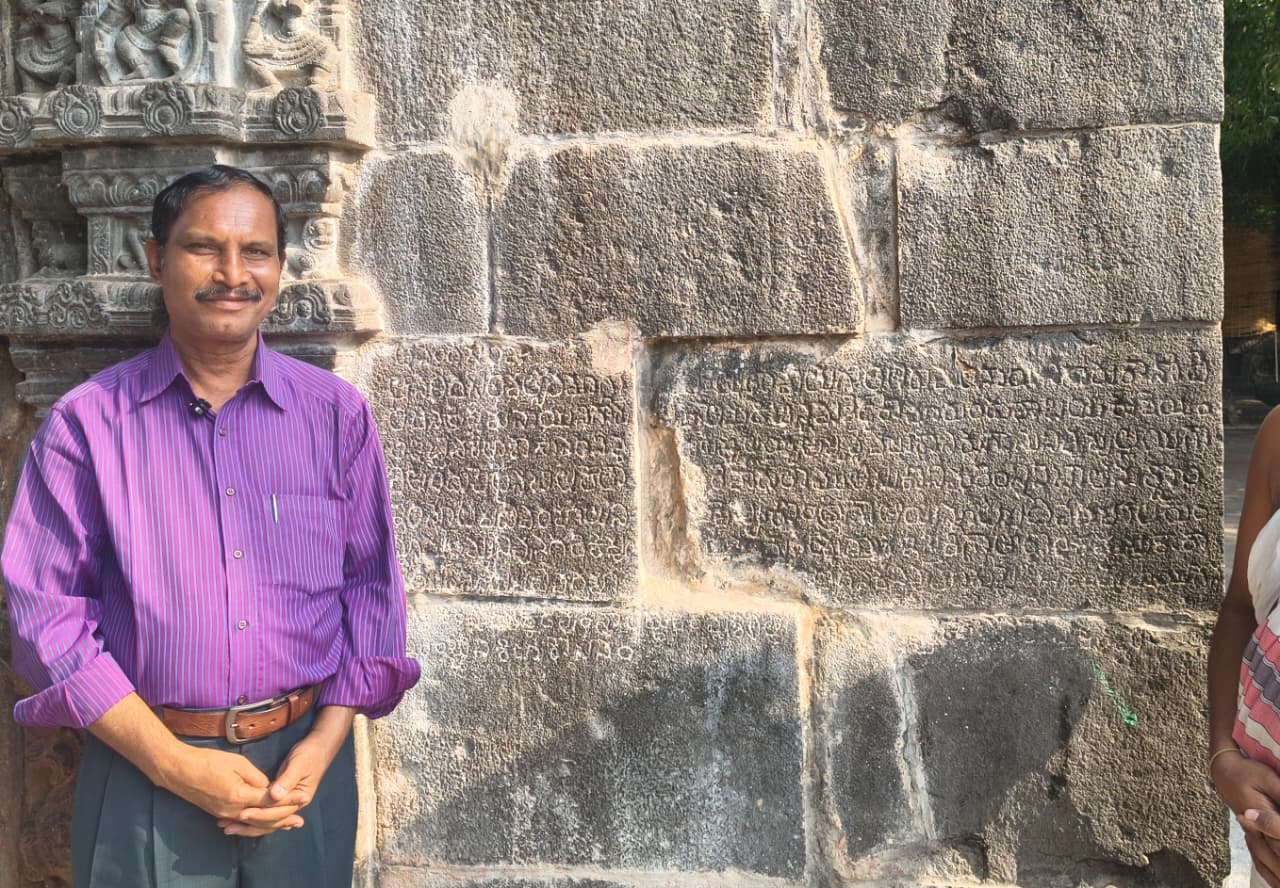
Historian MyNaa Swamy traced ‘Konidela’ Inscription at Tadipatri Temple
TADIPATRI (ANANTAPURAM DISTRICT) [VoM News]: A 16th-century Telugu inscription detailing the construction of the eastern gopuram (entrance tower) and the outer prakara (ramparts) has been discovered at the historic Sri Chintala Venkataramana Swamy temple in Tadipatri.The epigraph, dating back to December 1554 C.E., provides crucial insights into the architectural patronage and socio-political landscape during the twilight years of the Vijayanagara Empire, according to Historian MyNaa Swamy.
Addressing the media in front of Sri Chintala Raya Swamy temple, the historian said that the epigraph specifically credits three prominent donors..Gutti Tirumala Nayani garu, Konidela China Krishnama Nayani garu, Obayya-son of Chennamasetti. The document records a primary donation layout of 510 Varahas (gold coins of the Vijayanagara period), alongside a secondary transaction of 210 Varahas for the completion of the structural elements.
Read Updates From Featured by VoM
MyNaa Swamy explained that the discovery was made by him, during a field study focused on the Vijayanagara style of architecture in the Tadipatri region. The inscription is engraved on the left side of the temple’s main entrance. Written in Telugu script, the text corresponds to the month of Margasira in the ‘Ananda’ Nama year. While the Shalivahana Saka era numeral is missing due to damage sustained in the middle portion of the stone, cross-referential historical data fixes the timeline to late 1554 C.E., the historian added.
The inscription identifies the temple as ‘Chintala Thiruvengalanatha Temple’—the historical nomenclature for the presiding deity, Sri Chintala Venkata Ramana. It records substantial monetary contributions made toward the construction of the monumental eastern tower and the fortifying walls.
Analyzing the political backdrop of the inscription, MyNaa Swamy noted that the year 1554 C.E. represents a pivotal period in Vijayanagara history. “During this period, the empire was nominally under the sovereign rule of the Tuluva dynasty monarch, Sadasiva Deva Raya. However, de facto administrative control rested entirely with Mahamandaleshvara Araviti (Aliya) Rama Raya, the son-in-law of Monarch Sri Krishnadeva Raya,” the historian narrated.
Broader Discoveries:
Tadipatri temples have recently emerged as an epigraphical treasure trove. Alongside the gopuram text, researchers also highlighted the significance of a previously documented Tulasikota (Vikari year-1539 CE) inscription belonging to the reign of Tuluva Achyuta Devaraya,which has unlocked new dimensions regarding local administrative grants.
MyNaa Swamy expressed his gratitude to senior political leader J.C. Prabhakar Reddy for facilitating logistics and extending administrative support for the ongoing epigraphical and architectural research in the district. Archeologists believe further conservation of the damaged segments of the gateway could reveal more details about the medieval artisan guilds involved in building Tadipatri’s iconic stone structures.

Latest Posts
- Jammu Kashmir Youth Services Department to Review Rehbar-e-Khel Regularization on September 1
August 30, 2026 | Breaking News, Jammu Kashmir - India, Uzbekistan Agree on Long-Term Uranium Supply Arrangement: PM Modi
August 30, 2026 | Breaking News, India, Politics, World - Jammu Kashmir Weather Update: IMD Forecasts Widespread Rain, Thunderstorms; Flash Flood, Landslide Risk
August 30, 2026 | Breaking News, Jammu Kashmir, Weather - Abhishek Banerjee Summoned by Kolkata Police Over Billboard Row
August 30, 2026 | Breaking News, India, Politics - Why Are Chirag Paswan and Jitan Ram Manjhi Clashing Over Dalit Quota?
August 30, 2026 | Breaking News, India, Politics - Panjab University Law Student Dies By Suicide In Campus Hostel
August 30, 2026 | Breaking News, India - IAS Officer Gyanendra Kumar Gangwar Taken Into Custody Over Karnataka Public Service Commission (KPSC) Exam Irregularities
August 30, 2026 | Breaking News, India, Politics - BREAKING: Haakon VIII Takes Throne as Norway Mourns King Harald
August 30, 2026 | Breaking News, Politics, World - BREAKING: Zimbabwe Minibus-Truck Crash Kills 27
August 30, 2026 | Accidents, Breaking News, World - BREAKING: Ministry of External Affairs (MEA) Reestablishes Contact With 50 Indians, 108 Rescued; 275 Missing
August 30, 2026 | Breaking News, India