 Follow on Google News
Delhi High Court Denies Relief to Anil Ambani Aide in Money Laundering Case
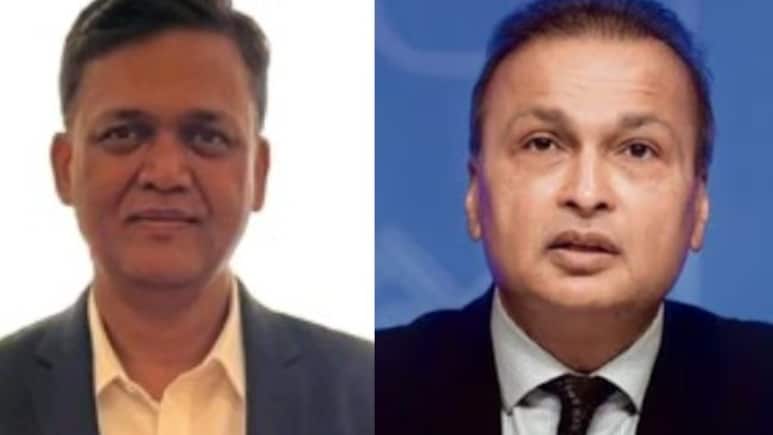
New Delhi: The Delhi High Court on Wednesday rejected the bail applications filed by Ashok Kumar Pal, former Chief Financial Officer (CFO) of Reliance Power Ltd, refusing to grant him either regular or interim bail in a money laundering case linked to an alleged fake bank guarantee of Rs 68.20 crore submitted to the Solar Energy Corporation of India (SECI) in connection with a tender.
Pal has been in custody since October 10, 2025.
Justice Madhu Jain dismissed the applications, observing that the accused was not entitled to bail at this stage in view of the nature of the allegations and material relied upon by the Directorate of Enforcement (ED).
His regular bail plea had earlier been dismissed by the trial court on March 11, 2026.
The ED case pertains to an alleged forged bank guarantee of Rs 68.20 crore, along with endorsements and confirmations, submitted before SECI as part of the tender process.
“Having regard to the nature of the allegations and the material relied upon by the Directorate of Enforcement, including statements recorded under Section 50 of the PMLA, documentary material and electronic communications collected during investigation, this Court is unable to record satisfaction that there are reasonable grounds for believing that the applicant is not guilty of the offence alleged,” Justice Madhu Jain observed in the order.
The Court said that the twin conditions prescribed under Section 45 of the Prevention of Money Laundering Act (PMLA) were not satisfied at this stage.
Justice Jain further observed that at the stage of considering a bail application, the Court is not required to undertake a detailed appreciation of evidence or record conclusive findings on disputed questions of fact.
“The material relied upon by the Directorate of Enforcement cannot be entirely disregarded and has to be evaluated in light of whether it reveals a prima facie case,” the Court said.
The High Court rejected the applicant’s submissions that he had no knowledge of the alleged forgery, acted only in his official capacity, himself initiated the complaint leading to registration of the CBI FIR, and that no proceeds of crime accrued to him, observing that these were matters requiring appreciation of evidence during trial.
Opposing the bail plea, the ED relied on WhatsApp communications extracted during the investigation. According to the agency, these communications suggested that Pal had forwarded a revised draft of the bank guarantee and modification of the issuing bank’s particulars from “FirstRand Investment Limited, USA” to “FirstRand Bank, Manila, Philippines.”
The ED further submitted that Reliance Power Ltd had engaged M/s Biswal Tradelink Private Limited for arranging the bank guarantee of Rs 68.20 crore in connection with the SECI tender and that substantial amounts were transferred pursuant to arrangements between the parties.
The agency also alleged that the bank guarantees, endorsements and confirmations furnished in support of the tender were forged and formed part of the transaction under investigation.
Senior Advocate N Hariharan, along with Siddharth Yadav, Alok Kumar and Varun Chandok, appeared for Ashok Kumar Pal.
Counsel for the accused submitted that Pal had been in custody since October 2025, and the case remained at a pre-cognisance stage. It argued that he could not be subjected to prolonged incarceration without trial, especially when cognisance in the matter was yet to be taken.
Senior Advocate Hariharan argued that the Supreme Court, in several judgments, had held that Article 21 of the Constitution (right to life and personal liberty) prevails over the twin conditions under Section 45 of the PMLA.
The defence also argued that no proceeds of crime had been generated and that Pal had served only in his professional capacity as CFO of Reliance Power Ltd.
It was further submitted that the maximum punishment under the PMLA is seven years and that Pal had already spent around eight months in custody. The defence argued that he had cooperated with the investigation and his statement had been recorded before his arrest.
The bail plea came up before a vacation bench after liberty was granted by the Supreme Court. Earlier, the matter had been listed for hearing on July 8.
Opposing the plea, Advocate Zoheb Hossain, Special Counsel for the ED, submitted that the allegations were serious in nature and related to an attempt to use a fake bank guarantee, attracting offences under the PMLA.
The ED also argued that Pal’s custody of eight months could not be considered prolonged in light of Section 45 of the PMLA and submitted that the PMLA, being a special statute, has an overriding effect over general law.
Also read: Coaching Centre Firing Case: Khan Sir Gets Interim Relief, Investigation Continues
The petitioner had contended that the genesis of the controversy revolves around furnishing a bank guarantee towards earnest money deposit to SECI as part of a tender condition and argued that the forged bank guarantee issued by FirstRand Bank was unknowingly procured.
The petitioner stated, “There is no gainsaying that the intention of the Applicant, acting on behalf of Reliance NU BESS Limited, was bona fide since the inception of the transaction, for he derives no benefit by knowingly procuring a forged BG. Thus, “intent”, a prerequisite of Sec. 3 of PMLA, 2002, evident from the use of the expression “indulge or knowingly assists or knowingly is a party”, stands obliterated qua the Applicant.
It was also argued that Pal’s arrest was illegal as it failed to prima facie satisfy the twin tests of “justifiable reasons to believe” and “necessity for arrest.”
(Except for the headline, this story has not been edited by VoM News staff and is published from a syndicated feed.)

Latest Posts
- Donald Trump Says US-South Korea Military Drills to Be Reduced, Cites ‘Good Ties’ With Kim Jong Un
August 17, 2026 | Breaking News, Politics, World - Massive Drone Attack on Moscow: Russia Says 600 Ukrainian Drones Targeted Region
August 17, 2026 | Breaking News, Russia-Ukraine Conflict, World - 7 Pilgrims Dead In Hotel Fire Near Tarapith Temple in Bengal
August 17, 2026 | Breaking News - Dimagi Naxal Party Instagram Account Crosses 1.6 lakh followers in a day, created following the PM’s Remarks of ‘Dimagi Naxal’
August 17, 2026 | Breaking News - BJP National spokesperson, Shehzad Poonawalla resigns from BJP; Cites financial, personal reasons
August 17, 2026 | Breaking News, India, Politics - NALSAR Controversy: Over 700 Lawyers Demand Resignation of BCI Chairman Manan Kumar Mishra
August 17, 2026 | Breaking News, India, Politics - 12 Killed, 10 Injured After Polish Tourist Bus Overturns on Hungary’s M3 Motorway
August 17, 2026 | Breaking News, World - Farmers Begin March Towards Delhi Over India-US Trade Deal, Khanauri Border Put on Alert
August 17, 2026 | Breaking News, India, Politics - West Bengal Man Dies After Alleged Assault Linked to Son’s CJP Protest; Suvendu Adhikari Assures Action
August 17, 2026 | Breaking News, India, Politics - Jharkhand Govt Calls for Peaceful Talks with Students Over Job Exam Dispute Today
August 17, 2026 | Breaking News, India, Protests