 Follow on Google News
Jammu Kashmir & Ladakh High Court Reinstates CRPF Constable Amit Kumar, Overturns 20-Year-Old Dismissal
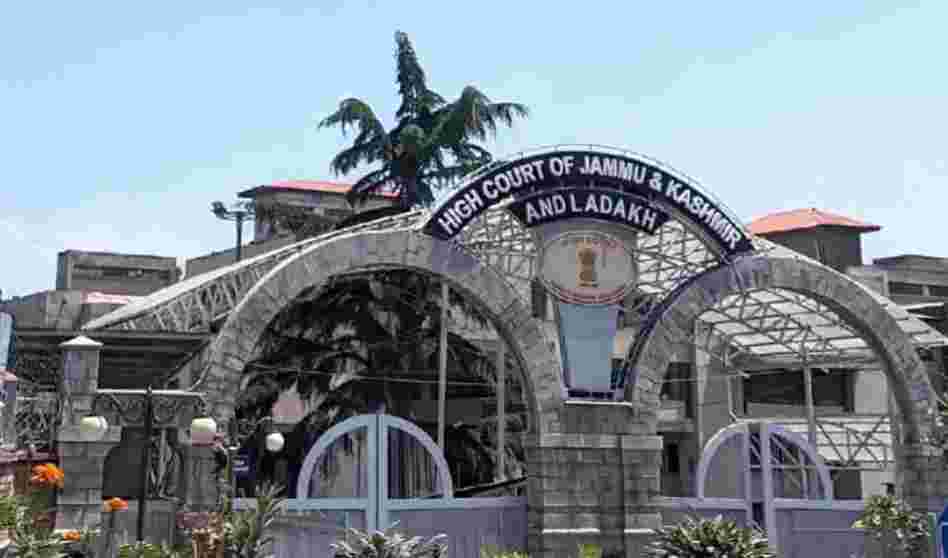
SRINAGAR: Bringing relief to a Central Reserve Police Force constable removed from service nearly two decades ago, the High Court of Jammu Kashmir and Ladakh has set aside the dismissal of Amit Kumar, holding that the departmental authorities failed to properly consider his medical condition and violated principles of natural justice while conducting the inquiry.
The judgment, delivered by Justice Sanjay Dhar on March 25, 2026, in SWP No. 1059/2008, arose from a challenge to the petitioner’s removal from service dated August 4, 2006, as well as the rejection of his statutory appeal on June 30, 2011. The petitioner was represented by Advocate Vikas Mangotra, while the respondents, including the Union of India, were represented by Central Government Standing Counsel Ranjeet Singh Jamwal.
According to the case record, Amit Kumar was appointed as a constable in 2003 and posted with the 93rd Battalion in Anantnag. In December 2005, he proceeded on sanctioned medical leave but failed to report back on duty upon its expiry. The petitioner maintained that his condition deteriorated while returning to duty, leading to prolonged treatment across multiple government hospitals, including Saharanpur, Baraut, and Muzaffarnagar, for ailments diagnosed as Typhoid and Hepatitis.
The respondents, however, treated his absence as unauthorised, initiated disciplinary proceedings, and eventually removed him from service after conducting an ex-parte inquiry. They contended that despite repeated notices, the petitioner failed to participate in the proceedings and did not furnish adequate justification for his continued absence, leading to his being declared a deserter and subjected to departmental action.
Before the High Court, the petitioner argued that he had consistently informed the authorities about his illness and inability to attend the inquiry, submitting medical records in support of his claims. He contended that the inquiry was conducted without granting him an opportunity of hearing and that the authorities had ignored material evidence, thereby rendering the proceedings arbitrary.
Examining the record, the Court noted that there was no dispute that the petitioner had initially proceeded on duly sanctioned medical leave and had subsequently overstayed. However, it emphasised that mere unauthorised absence does not automatically justify punitive action unless it is shown to be “willful and deliberate.”
The Court found that the petitioner had, in fact, communicated his medical condition to the Enquiry Officer and had submitted supporting medical documents. Referring to the disciplinary authority’s own order, the Court observed that these medical records were acknowledged but ultimately discarded without proper verification.
In a key observation, the Court held, “It was not open either to the Enquiry Officer or to the Disciplinary Authority or to the Appellate Authority to discard the medical records produced by the petitioner without ascertaining the authenticity and veracity of these documents.”
The judgment further underlined that the authorities had proceeded on assumptions rather than undertaking any effort to verify the medical evidence. It rejected the respondents’ contention that the documents were fabricated, stating that such a conclusion could not be reached without due examination.
Citing precedent, the Court reiterated that in cases of prolonged absence on medical grounds, the burden lies on the disciplinary authority to establish that the absence was intentional. “Merely because the petitioner has remained unauthorizedly absent… cannot form a ground for imposing punishment upon him unless it is shown that his unauthorized absence from duty was willful and deliberate,” the Court observed.
The Court also found fault with the manner in which the inquiry was conducted, noting that despite receiving communications from the petitioner regarding his illness, the Enquiry Officer neither deferred the proceedings nor sought verification of the claims. Instead, the inquiry was conducted ex-parte, culminating in the dismissal order.
Highlighting the violation of procedural fairness, the Court observed that even if the petitioner’s communications were not initially accompanied by complete medical records, “the proper course for the Enquiry Officer was to call upon the delinquent official either to produce the medical certificates or to direct him to be examined by a Medical Officer.”
The Court concluded that the failure to consider the petitioner’s medical condition and the decision to proceed ex-parte amounted to a “serious breach of principles of natural justice.” It also noted that the appellate authority had dismissed the petitioner’s appeal in a “cryptic manner” without addressing these crucial aspects.
Setting aside the removal order, the High Court directed the respondents to reinstate the petitioner in service. However, it granted liberty to the authorities to conduct a fresh inquiry, directing that during such proceedings, the Enquiry Officer must verify the authenticity of the medical records submitted by the petitioner.
“The respondents are directed to hold a fresh enquiry… during which the Enquiry Officer shall ascertain veracity of the medical records produced by the petitioner,” the Court ordered, adding that the final decision on the petitioner’s service period would depend on the outcome of the fresh inquiry.
The ruling reinforces the principle that disciplinary proceedings, particularly those leading to severe penalties like dismissal, must adhere strictly to fairness and due process, especially when an employee cites medical incapacity as the reason for absence.

Latest Posts
- AI Ready School Launches National Research Programme to Measure AI’s Impact on Indian K–12 Education
September 21, 2026 | AI & ML, Breaking News, India, Press Release - MP’s Mandate Is to Be J&K’s Voice, Not Destabilise NC Govt: NC MLA Javed Beg on MP Aga Ruhullah
September 21, 2026 | Breaking News, Jammu Kashmir, Politics - Young Star Cricket Club Doda Announces Free Cricket Trials Across India
September 20, 2026 | Breaking News, Doda, Jammu Kashmir, Sports - Houthis Say Saudi Arabia Targeted Yemen With 26 Strikes In 24 Hours
September 19, 2026 | Breaking News, World - BREAKING: US Clears Multibillion-Dollar Air Defence Sale to Kyiv
September 19, 2026 | Breaking News, World - Fire Reported Near Riyadh Airport in Saudi Arabia Amid Yemen Fighting
September 19, 2026 | Breaking News, World - Leading British-Pakistani consultant Urologist Dr Muhammad Shabi Ahmed honoured for advancing urology and supporting disadvantaged patients in Pakistan
September 19, 2026 | Breaking News, World - Fincom raises $20m to make remittances faster and cheaper
September 19, 2026 | Business, World - Delhi Police Bust 3 Fake International Call Centres, 23 Arrested
September 18, 2026 | Breaking News, India, Politics - Mamata Banerjee Moves Supreme Court Against EC Freeze on Trinamool Congress Name, Symbol
September 18, 2026 | Breaking News, India, Politics