 Follow on Google News
Tensions Escalate as Iran Warns US Military, Israel of Retaliation if Attacked
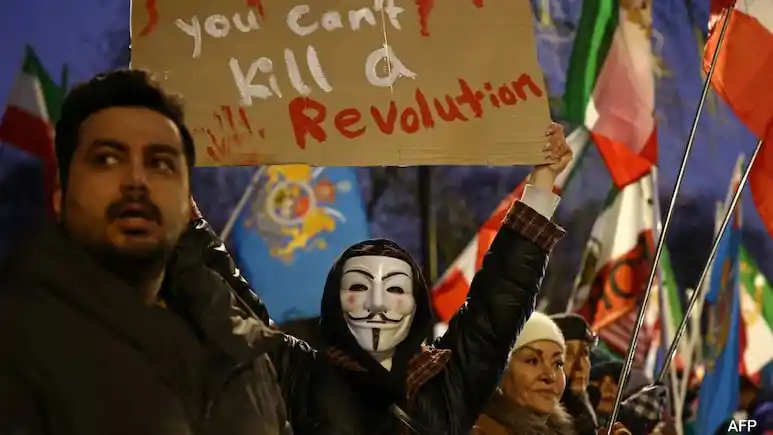
Widespread protests challenging Iran’s ruling theocracy continued into Sunday, crossing the two-week mark as demonstrators poured onto the streets in Tehran and Mashhad, the country’s second-largest city. Rights groups say at least 116 people have been killed so far, underscoring the growing violence surrounding the unrest.
Assessing the scale of the demonstrations has become increasingly difficult from outside Iran. Authorities have shut down the internet nationwide and cut international phone lines, creating a near-total information blackout. Despite that, the US-based Human Rights Activists News Agency reports that more than 2,600 people have been detained since the protests began.
As tensions simmered on the streets, the rhetoric inside Iran’s halls of power escalated sharply. Parliament Speaker Mohammad Bagher Qalibaf warned that US and Israeli forces would be considered “legitimate targets” if Washington carried out a military strike against Iran, as previously threatened by US President Donald Trump. His remarks came during a heated parliamentary session broadcast live on state television, with lawmakers chanting “Death to America” as they crowded the dais.
“The people of Iran should know that we will deal with them in the most severe way,” Qalibaf said, praising police and the Revolutionary Guard, including its Basij militia, for what he described as standing firm against unrest. He went further, saying Iran would not limit itself to retaliation after an attack. “We will act based on any objective signs of a threat,” he warned, naming Israel and US military bases and ships in the region as potential targets.
The comments fueled fears among Iranians abroad that the communications blackout could give hard-line elements within Iran’s security forces cover to intensify a crackdown. Those concerns persist despite Trump’s public warnings that he is prepared to act to protect peaceful demonstrators. In a social media post, Trump wrote that Iran was “looking at FREEDOM, perhaps like never before,” adding that the United States stood ready to help.
US media outlets, including The New York Times and The Wall Street Journal, reported late Saturday that Trump has been presented with military options but has not yet made a final decision. The State Department reinforced the administration’s stance, cautioning Tehran not to underestimate the president’s resolve.
On the ground, videos believed to have been sent via satellite connections showed protesters gathering in Tehran’s northern Punak neighborhood, waving illuminated mobile phones after streets were reportedly blocked by authorities. Other clips appeared to show peaceful marches and drivers sounding their horns in solidarity.
In Mashhad, footage circulating online showed confrontations between protesters and security forces, with burning debris and overturned dumpsters blocking roads. The demonstrations there carry particular weight, as the city is home to the Imam Reza shrine, the holiest site in Shiite Islam. Smaller protests were also reported in Kerman, in southeastern Iran.
State television attempted to counter the images by airing reports from what it described as calm streets in several cities, complete with date stamps. Tehran and Mashhad were notably absent from those broadcasts. Pro-government rallies were shown in Qom and Qazvin instead.
Also Read: Myanmar Junta Elections Continues in its Second Phase Despite Criticism
Iran’s leadership has signaled little willingness to soften its stance. Supreme Leader Ayatollah Ali Khamenei has hinted at an impending clampdown, while Attorney General Mohammad Movahedi Azad warned that protesters could be charged as “enemies of God,” an offense that carries the death penalty. State media said even those accused of aiding demonstrators could face the same charge.
The unrest was sparked on December 28 by the collapse of Iran’s currency, with the rial now trading at more than 1.4 million to the US dollar. As economic anger spread, protests evolved into open challenges to the Islamic Republic itself.
Iran’s exiled Crown Prince Reza Pahlavi has urged continued demonstrations, calling on protesters to reclaim public spaces and carry national symbols from the pre-1979 era. While chants praising the former shah have been heard, it remains unclear whether they reflect support for Pahlavi personally or nostalgia for a period before clerical rule.
Also Read: Iran Protests Intensify; Nationwide Internet Shutdown Still in Place
For now, the streets remain tense, the flow of information tightly controlled, and the standoff between protesters and the state shows no sign of easing.

Latest Posts
- Iran’s Powerful Parliament Speaker Mohammad Bagher Ghalibaf Warns of Possible Attack on Iran Island Amid Rising Gulf Tensions
March 26, 2026 | Breaking News, Politics, World - India Retains 4 Percent Retail Inflation Target for Next Five Years Till 2031
March 26, 2026 | Breaking News, India - Andhra Pradesh Police Arrest 12 with Suspected Terror Links in Multi-State Operation
March 26, 2026 | Breaking News, India - DigiCert Updates Document Trust Manager to Strengthen Digital Security and Prevent AI Fraud
March 25, 2026 | AI & ML, World - Jammu Kashmir Cricket Association Announces Talent Hunt Trials, Training Camps Across J&K
March 25, 2026 | Breaking News, Jammu Kashmir - 170 Custodial Deaths Across Country In First 74 Days Of 2026: Centre
March 25, 2026 | Breaking News, India - India Updates Paris Climate Pledge; Approves 47 Percent Emissions Intensity Cut Target by 2035
March 25, 2026 | Breaking News, Climate & Environment, India - Finance Bill 2026 Passed in Lok Sabha; All-Party Meet on Middle East Crisis Today
March 25, 2026 | Breaking News, India, Politics - Amid Extensive Rumour Mongering, Bharat Petroleum Assures of No Fuel Shortage in India
March 25, 2026 | Breaking News, India - Medical Employees Union at GMC Jammu Continues Strike Over 2.5 Days’ Salary Deduction, Patient Care Affected
March 25, 2026 | Jammu Kashmir