 Follow on Google News
US-Iran War: US Launches Major Combat Operations in Iran as Israel Strikes Tehran, Hips Off Escalation
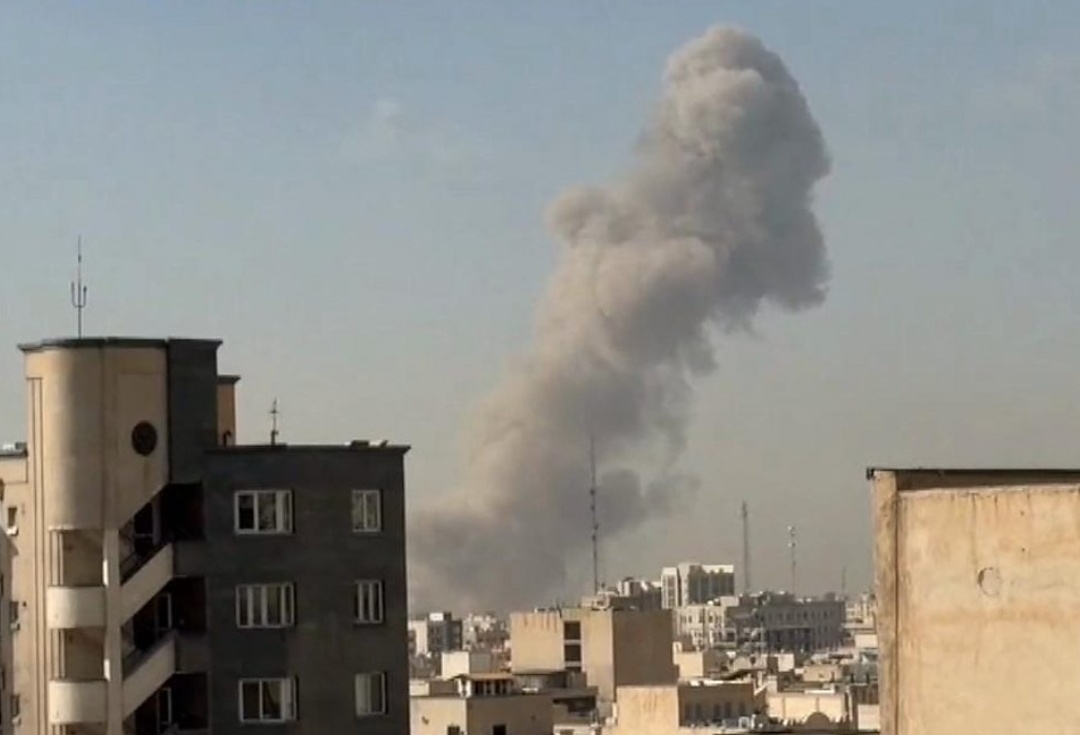
The Middle East edged closer to a wider war early Friday after US President Donald Trump announced that American forces had begun what he called “major combat operations” inside Iran — just as Israel confirmed it had launched missile strikes of its own.
Explosions rippled across Tehran before dawn. Residents reported blasts in several neighborhoods, including areas housing key government institutions. Strikes were also reported in Qom, Isfahan, Kermanshah, Lorestan, Tabriz and Karaj, according to Iranian media. Independent verification of the full extent of the damage wasn’t immediately possible.
In a brief address, Trump said the operation was aimed at eliminating “imminent threats from the Iranian regime” and ensuring Tehran “never obtains a nuclear weapon.” He vowed to dismantle Iran’s missile capabilities and cripple its naval forces, framing the assault as a defensive move to protect American lives.
Iranian state media moved quickly to project calm. The Islamic Republic News Agency reported that President Masoud Pezeshkian was “safe and sound,” citing a source in the presidential office. There was, however, no immediate formal statement from the government.
Hospitals across the country were placed on high alert. Ambulances were dispatched to affected districts in Tehran, including the Pasteur area, home to the presidential complex. Iranian news outlets said several sites had come under attack, among them the Ministry of Intelligence, the Ministry of Defence, the Atomic Energy Organisation of Iran and the Parchin military complex.
At the same time, Iranian agencies reported cyberattacks targeting domestic media websites, including those affiliated with the state.
In Washington, officials familiar with early assessments suggested the strikes may have focused on locations associated with Supreme Leader Ali Khamenei. One source described the objective as potentially aimed at “decapitating” the leadership — a move that, if confirmed, would mark a dramatic escalation beyond limited deterrence.
The attacks come at a delicate diplomatic moment. Just days ago, negotiators had concluded another round of talks in Geneva over Iran’s nuclear programme. While progress appeared incremental, mediators had signaled that a framework for further discussion was taking shape. That fragile momentum now looks shattered.
The regional fallout was immediate.
In Lebanon, Israeli warplanes carried out fresh strikes in the Bekaa Valley and the Iqlim al-Tuffah region, areas Israel says are used by Hezbollah. The escalation has heightened fears that Lebanon could be pulled into a broader confrontation, given Hezbollah’s deep ties to Tehran.
Elsewhere, Iraq closed its airspace as a precaution. The US embassies in Bahrain and Qatar ordered personnel to shelter in place and urged American citizens to do the same, advising them to secure supplies and remain indoors until further notice.
Inside the United States, the political calculus is complex. Trump has long criticized what he calls “stupid foreign wars,” and segments of his political base remain wary of deepening military entanglements abroad. Any sustained conflict — especially one resulting in American casualties — could test that support.
For now, the scale and duration of the operation remain unclear. Some analysts in Washington had speculated that any US action might be swift and limited — a so-called “one and done” strike meant to pressure Tehran back to the negotiating table. Yet the breadth of reported targets and the president’s rhetoric suggest something potentially more expansive.
Iranian officials, speaking to Reuters, warned that retaliation is being prepared and would be “crushing.” What form that response might take — missile strikes, proxy attacks across the region, or disruptions to global shipping — is uncertain.
What is clear is this: a conflict that had simmered through proxy battles and diplomatic brinkmanship has burst into open confrontation. Whether it remains contained or spirals into a broader regional war may depend on decisions made in the coming hours.

Latest Posts
- Vishwesh Negi Appointed India’s Next Ambassador to Iran
August 4, 2026 | Breaking News, India, Politics - Leader of Opposition Udhayanidhi Stalin Arrested by Chennai Police Over Controversial Remarks on Actor Trisha
August 4, 2026 | Breaking News, India, Politics - Pakistan Blocks Al Jazeera Reportedly After Coverage of PoK Protests, Electoral Process
August 4, 2026 | Breaking News, World - US Acknowledges Strikes Failed to Pressure Iran, Military Seeks New Strategies
August 4, 2026 | Breaking News, Politics, World - Hormuz Shipping Remains Slow as Oil Prices Fall on Renewed Hopes of US-Iran Talks
August 4, 2026 | Breaking News, World - Nifty 50 Likely to Open in Red After Sharp Previous Session Rally
August 4, 2026 | Breaking News, Business, Stock Market - Brown University President Christina Paxson to Step Down After Clash With Trump Administration
August 4, 2026 | Breaking News, Politics, World - US State Department Plans Closure of Diplomatic Posts in Canada, Japan, Indonesia, Cameroon and Grenada: Report
August 4, 2026 | Breaking News, Politics, World - Amazon Market Value Crosses $3 Trillion for First Time as Shares Surge 5%
August 4, 2026 | Breaking News, Business, Markets - Pacific Nation Nauru Changes Name to Republic of Naoero; Adopts Native-Language Identity
August 4, 2026 | Breaking News, Politics, World