 Follow on Google News
Supreme Court Slams Meta on WhatsApp Privacy Policy, Says ‘Follow Constitution or Leave India’
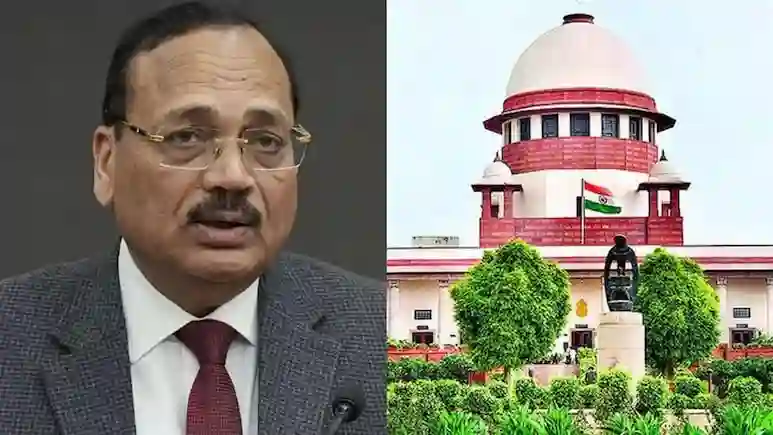
The Supreme Court came down sharply on Meta on Tuesday while hearing challenges to WhatsApp’s controversial 2021 “take it or leave it” privacy policy, with Chief Justice Surya Kant questioning how forced consent could ever be considered lawful under the Constitution.
To underline the court’s concern, the Chief Justice shared a personal anecdote. He said that if a user messages a doctor on WhatsApp about feeling unwell and receives a prescription, targeted advertisements related to medicines often begin appearing soon after.
“That itself shows what is happening with data,” the Chief Justice observed, suggesting that private user information is being quietly shared between Meta, WhatsApp and third parties for commercial gain.
In a pointed warning, he added, “We will not allow you to share a single digit of our data. If you can’t follow our Constitution, leave India.” He described the policy as “exploitative” and said such practices amounted to a “mockery of the Constitution.”
The bench was hearing petitions related to WhatsApp’s privacy policy, including a challenge to an order of the company law tribunal that upheld a ₹213 crore penalty imposed by the Competition Commission of India (CCI). The fine was linked to WhatsApp’s data-sharing practices and their impact on competition.
Are American businesses on life support? New debt data reveals troubling trend
There was also a cross-appeal by the CCI concerning the sharing of user data for advertising purposes. While the tribunal had earlier ruled that there was no abuse of dominance by Meta, it still allowed the regulator’s appeal on data sharing.
During the hearing, the court questioned how user consent could be treated as genuine when accepting the updated policy was mandatory to continue using the app. The judges also expressed scepticism about Meta’s claim that users had meaningful “opt-out” options.
Noting that many users may not fully grasp the “crafty language” used in such policies, the court said consent obtained in this manner appeared to be “manufactured consent.” It described ordinary users as “silent consumers” who were being commercially exploited without a real choice.
The bench indicated that it was prima facie of the view that the system leaves users with no effective voice or control over their personal data.
The matter has now been listed for further hearing on February 9. The Supreme Court also directed that the Union government be added as a respondent, allowing it to file its counter affidavit in the case.

Latest Posts
- Sunil Dimple Welcomes Supreme Court Verdict on SRO-384, Demands Regularisation of Employees in Jammu Kashmir
March 15, 2026 | Jammu Kashmir, Politics - North Korea Tests Nuclear-Capable Rocket Launchers as Kim Jong Un Attends With Daughter
March 15, 2026 | Breaking News, Politics, World - Tamil Poet R. Vairamuthu to Receive 60th Jnanpith Award for 2025
March 15, 2026 | Breaking News, Entertainment, India - Tuticorin Airport Renamed Thoothukudi Airport; Madurai Airport Declared International Airport
March 15, 2026 | Breaking News, India, Politics - Ex-BRS MLA Pilot Rohith Reddy’s Farmhouse Raided, 5 Test Positive For Drugs
March 15, 2026 | Breaking News, India, Politics - TVK Chief Vijay Appears Before CBI For 3rd Round Of Questioning In Karur Stampede
March 15, 2026 | Breaking News, India, Politics - Iran War LIVE Updates March 15 – 2026: Missiles Trigger Sirens, Democrats Condemn
March 15, 2026 | Live Updates, Politics, World - France Ready to Host Lebanon–Israel Ceasefire Talks in Paris
March 14, 2026 | Breaking News, Politics, World - 18 Percent Transport Fare Hike In Jammu kashmir Approved by Jammu Kashmir Cabinet
March 14, 2026 | Breaking News, Jammu Kashmir - Doda Police Seize Two Dumpers for Illegal Mining
March 14, 2026 | Breaking News, Doda, Jammu Kashmir