 Follow on Google News
Meet Neal Katyal, Indian-American Lawyer Who Argued Against Donald Trump’s Tariffs
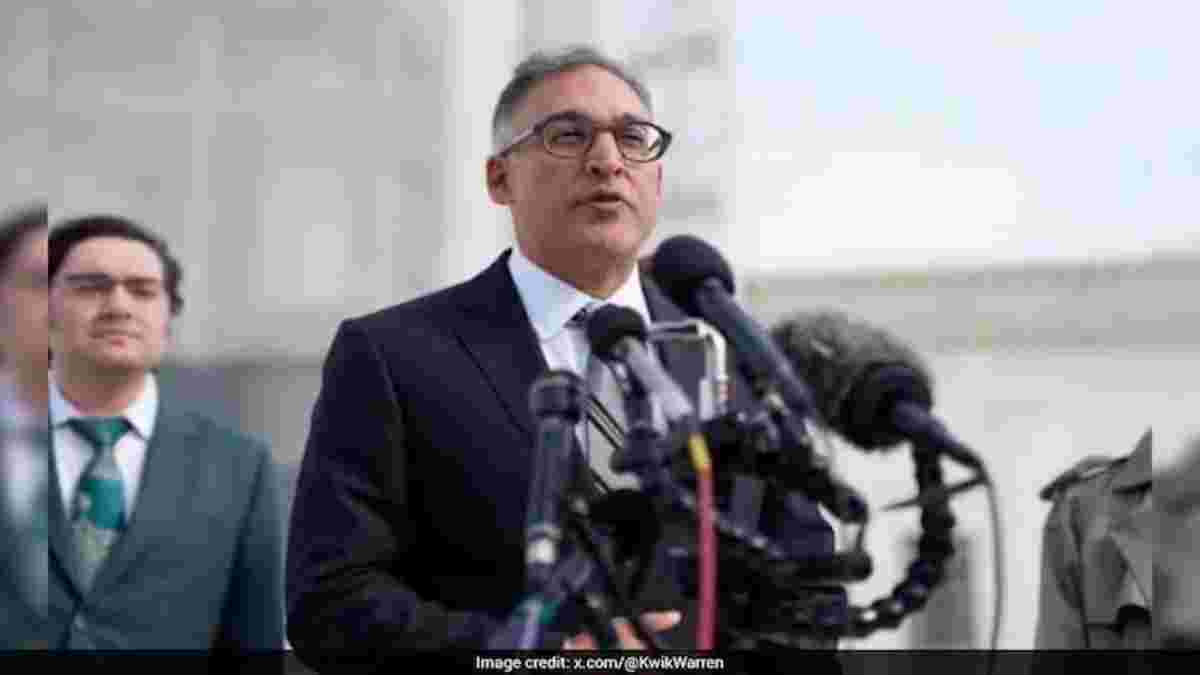
Indian-American attorney Neal Katyal has emerged as the face of a landmark ruling by the Supreme Court of the United States that struck down sweeping tariffs imposed by President Donald Trump.
Katyal challenged Trump’s use of the International Emergency Economic Powers Act (IEEPA), a 1977 law that grants the president authority to regulate commerce during national emergencies. He argued that the tariffs amounted to “unjust, unconstitutional taxes” on imports from nearly every major trading partner and exceeded presidential powers.
Moments after the verdict, Katyal called the decision a victory for constitutional principles. “Today, the United States Supreme Court stood up for the rule of law, and Americans everywhere. Its message was simple: Presidents are powerful, but our Constitution is more powerful still. In America, only Congress can impose taxes on the American people,” he said.
Donald Trump Signs 10% Global Tariffs Order After Supreme Court Ruling
The case was brought by small businesses and supported by the Liberty Justice Center. Trump had defended the tariffs as necessary for national security and economic leverage, citing trade deficits and the fentanyl crisis as national emergencies.
From Immigrant Roots to Supreme Court Advocate
Born in Chicago to Indian immigrant parents — a doctor and an engineer — Katyal has built a career around major constitutional battles. A graduate of Dartmouth College and Yale Law School, he clerked for Justice Stephen Breyer at the Supreme Court.
In 2010, he was appointed Acting Solicitor General by President Barack Obama, becoming America’s top courtroom advocate. Over the years, he has argued more than 50 cases before the Supreme Court, setting records among minority advocates.
Currently a partner at Milbank LLP and a professor at Georgetown University Law Center, Katyal specialises in constitutional and complex appellate litigation. His notable cases include defending the Voting Rights Act of 1965, challenging Trump’s 2017 travel ban, and securing major rulings in environmental and national security disputes. He also served as Special Prosecutor for Minnesota in the murder case of George Floyd and authored the book Impeach: The Case Against Donald Trump.
The Supreme Court’s ruling is expected to significantly limit a president’s ability to invoke emergency economic powers to impose broad tariffs without explicit approval from Congress, reinforcing the constitutional separation of powers.

Latest Posts
- Pull Doda Bridge Declared Safe for Traffic, Subject to Continuous Monitoring: DIQC Report
July 29, 2026 | Breaking News, Doda, Jammu Kashmir - Unilever agrees two-year worker protection after $65 billion McCormick merger, memo shows
July 29, 2026 | Breaking News, Business, Stock Market - Adani Enterprises Posts Quarterly Loss After One-Time OFAC Settlement Charge
July 29, 2026 | Breaking News, Business, India - Asian Paints Beats Q1 Estimates
July 29, 2026 | Breaking News, Business, Stock Market - Former PM Sheikh Hasina Vows Return to Bangladesh by December Despite Arrest, Death Fears
July 29, 2026 | Breaking News, Politics, World - Russia Charges Telegram Founder Pavel Durov With ‘Aiding Terrorism’, Puts Him on Wanted List
July 29, 2026 | Breaking News, Politics, World - US, Saudi Forces Strike Iran-Backed Militias in Iraq as Regional Tensions Escalate
July 29, 2026 | Breaking News, Politics, World - India Condemns Attacks on Ships in Strait of Hormuz at UN Security Council; Calls for Immediate De-escalation
July 29, 2026 | Breaking News, Politics, World - No Evidence of Active Cyberattack on DRDO , Defence Ministry Refutes Reports
July 29, 2026 | Breaking News, Cybersecurity, India - CBI Files Chargesheet Against 13 Accused in NEET-UG 2026 Paper Leak Case
July 29, 2026 | Breaking News, India, Politics