
 Follow on Google News
Japan’s PM Sanae Takaichi Set for Landslide Win in Snap Elections
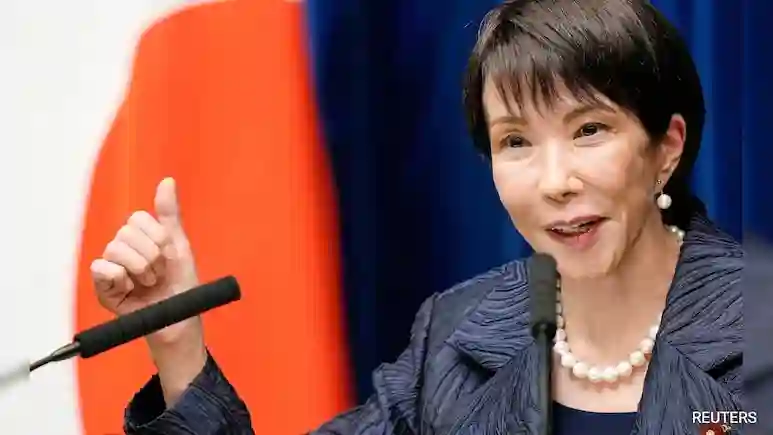
Japanese Prime Minister Sanae Takaichi was projected on Sunday to have secured a decisive victory in snap general elections, restoring a commanding mandate for her Liberal Democratic Party (LDP) but raising concerns in China and among financial markets.
According to projections by public broadcaster NHK, Takaichi’s LDP is expected to win between 274 and 328 seats in the 465-member lower house, a sharp rise from its current strength of 198 seats. Along with coalition partner Japan Innovation Party (JIP), the ruling bloc is forecast to secure between 302 and 366 seats.
If the alliance crosses the 310-seat mark, it would regain a two-thirds majority for the first time since 2017, when elections were held under Takaichi’s political mentor, former prime minister Shinzo Abe.
Takaichi, who took office in October, has revitalised the LDP, which has governed Japan almost continuously for decades but had suffered electoral setbacks in recent years amid voter anger over rising prices and corruption scandals. Under her predecessor Shigeru Ishiba, the ruling bloc lost its majority in the upper house last year, followed by the loss of control of the lower chamber in 2024.
At 64, Takaichi has defied early scepticism. Once considered part of the ultra-conservative fringe of the LDP, she has struck a chord with voters, particularly the young, blending a tough political image with unexpected pop-culture appeal. A former heavy metal drummer and self-professed admirer of Britain’s former prime minister Margaret Thatcher, she has drawn attention for everything from her fashion choices to videos of her jamming to K-pop with South Korea’s president.
Despite her popularity, economic anxieties loom large. Inflation remains a key concern for voters, with prices rising faster than incomes.
“With prices rising like this, what matters most to me is what policies they’ll adopt to deal with inflation,” said Chika Sakamoto, a 50-year-old voter in Tokyo. “Prices for just about everything are really going up, but incomes aren’t rising much, so our disposable income is shrinking.”
Takaichi has already rolled out a $135-billion stimulus package aimed at cushioning households from inflationary pressures and has promised to suspend the consumption tax on food. However, her economic agenda has triggered unease over Japan’s already fragile public finances. The country’s debt stands at more than twice the size of its economy, and yields on long-term government bonds have recently hit record highs, unsettling global markets.
“Various parties are proposing policies like abolishing the consumption tax. While that might be fine for now, I’m very worried about whether such measures are responsible for future generations,” said voter Taku Sakamoto, 49.
Beyond the economy, Takaichi’s emphatic win could complicate Japan’s relations with China. Seen as a China hawk even before becoming prime minister, she suggested within weeks of taking office that Japan could intervene militarily if Beijing attempted to seize self-ruled Taiwan by force.
The remarks drew a sharp reaction from China, which considers Taiwan part of its territory. Beijing summoned Japan’s ambassador, warned its citizens against travelling to Japan, and conducted joint air drills with Russia. In a symbolic move, China also sent back Japan’s last two giant pandas.
The diplomatic tensions came shortly after Takaichi hosted US President Donald Trump, who later publicly endorsed her as a “strong, powerful, and wise leader.”
China Conducted Nuclear Tests A Week After Galwan Clash In 2020: US
Political analysts say the confrontation with China may have bolstered her domestic standing. Margarita Estevez-Abe, an associate professor of political science at Syracuse University, noted that Takaichi’s assertive stance resonated with voters.
“With this win, she doesn’t have to worry about elections until the next upper house polls in 2028,” Estevez-Abe said. “The best outcome for Japan would be for her to now take a breath and focus on stabilising relations with China.”
With a strong mandate expected, Takaichi faces the challenge of balancing economic reform, fiscal discipline, and regional diplomacy at a time of heightened geopolitical and financial uncertainty.

Latest Posts
- Provident Fund Body EPFO Retains 8.25 Percent Interest For 2025-26
March 2, 2026 | Breaking News, India - Oil Prices Jump Up To 12% As Middle East Conflict Sparks Supply Fears
March 2, 2026 | Breaking News, Business, World - US Denies Iranian Strike On USS Abraham Lincoln As UAE Reports Drone Attack
March 1, 2026 | Breaking News, Politics, World - Iran Claims Missile Strike On USS Abraham Lincoln As Leadership Transition Unfolds
March 1, 2026 | Breaking News, Politics, World - Ayatollah Alireza Arafi – The Interim Supreme Leader | Will He Carve Out Iran from Sensitive Phase After the Death of Ali Khamenei
March 1, 2026 | Breaking News, Politics, World - Saudi Prince Mohammed bin Salman Made Multiple Private Calls to Trump Urging Strike on Iran: Washington Report
March 1, 2026 | Breaking News, Politics, World - United Kingdom Maritime Trade Operations (UKMTO) Warns of ‘Significant Military Activity’ Around Strait of Hormuz
March 1, 2026 | Breaking News, Politics, World - Islamic Revolutionary Guard Corps IRGC Vows Relentless Offensive Until ‘Enemy Is Decisively Defeated’
February 28, 2026 | Breaking News, Politics, World - Middle East Tensions Escalate as Iran, Israel, US Exchange Strikes; Gulf States on High Alert
February 28, 2026 | Breaking News, Politics, World - Iran-US War Escalates LIVE Updates: Iran Condemns Cites Right to Self-Defence Under UN Charter
February 28, 2026 | Live Updates, Politics, World