
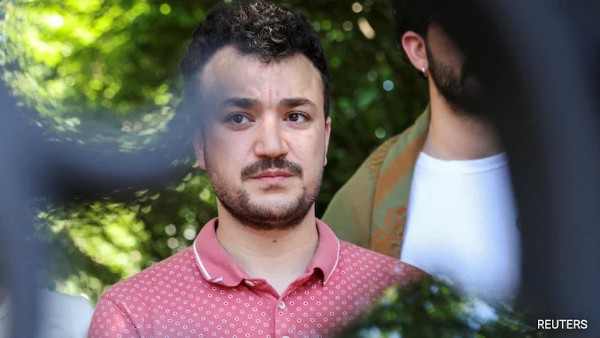
Columbia University Graduate Mahmoud Khalil Appeals to US Supreme Court to Block Re-Arrest and Deportation Under Trump Administration
Columbia University graduate Mahmoud Khalil on Monday asked the US Supreme Court to overturn a ruling that opened the door for President Donald Trump’s administration to re-arrest and deport the Palestinian activist.
Khalil’s lawyers asked the justices to take up his case after the Philadelphia-based 3rd US Circuit Court of Appeals ruled that federal immigration law barred a lower-court judge from ordering his release from US Immigration and Customs Enforcement custody.
Khalil was among the most prominent foreign students to be arrested last year as the Trump administration pursued a campaign to detain and deport noncitizens who engaged in pro-Palestinian activism on college campuses.
His lawyers say the Supreme Court should make clear immigration law does not prevent noncitizens from pursuing cases arguing they have been detained to punish them for speech that is protected by the US Constitution’s First Amendment.
“If the Trump administration can punish someone for their pro-Palestine speech, this or any future administration can punish anyone for any speech,” Khalil told reporters on Monday.
If the 3rd Circuit’s decision is allowed to stand, Khalil faces the prospect of arrest and deportation, after the Board of Immigration Appeals in April rejected his challenge to an immigration judge’s order that he be removed to Algeria or Syria.
A lower court order barring him from being re-detained remains in place for now until the Supreme Court rules. A separate appeal of the immigration judge’s order remains pending.
KHALIL’S BACKGROUND AND ARREST
Khalil, a prominent figure in pro-Palestinian protests against Israel’s war in Gaza, is an Algerian citizen who was born in a Palestinian refugee camp in Syria.
Immigration agents arrested him in March 2025 in the lobby of his university residence in Manhattan despite being a lawful permanent resident, or green-card holder. His wife and their 1-year-old son are both US citizens.
Secretary of State Marco Rubio had invoked an obscure provision of the Immigration and Nationality Act to deem Khalil removable, citing his involvement in “antisemitic protests and disruptive activities” at Columbia in 2024 the government said fostered a hostile environment for Jewish students.
He was released from a Louisiana detention center in June 2025 after the New Jersey-based US District Judge Michael Farbiarz, an appointee of former Democratic President Joe Biden, ordered the Department of Homeland Security, which oversees ICE, to release him.
In January, a 2-1 panel of the 3rd Circuit overturned Farbiarz’s decision, saying that under the Immigration and Nationality Act, Khalil’s claims could not be addressed through a district court and instead could be raised in an appeal of a removal order from an immigration judge.
After the full appeals court declined to reconsider the case, Khalil turned to the Supreme Court.
Federal appeals courts are split on whether district judges may hear challenges like Khalil’s or whether such claims must proceed first through immigration courts, which are not part of the federal judiciary but are instead run by the US Department of Justice.
The Trump administration last month asked the Supreme Court to overturn a ruling in a similar case favoring Georgetown University scholar Badar Khan Suri, another pro-Palestinian advocate detained by ICE who was ordered released.
(Except for the headline, this story has not been edited by NDTV staff and is published from a syndicated feed.)
Khalil’s lawyers asked the justices to take up his case after the Philadelphia-based 3rd US Circuit Court of Appeals ruled that federal immigration law barred a lower-court judge from ordering his release from US Immigration and Customs Enforcement custody.
Khalil was among the most prominent foreign students to be arrested last year as the Trump administration pursued a campaign to detain and deport noncitizens who engaged in pro-Palestinian activism on college campuses.
His lawyers say the Supreme Court should make clear immigration law does not prevent noncitizens from pursuing cases arguing they have been detained to punish them for speech that is protected by the US Constitution’s First Amendment.
“If the Trump administration can punish someone for their pro-Palestine speech, this or any future administration can punish anyone for any speech,” Khalil told reporters on Monday.
If the 3rd Circuit’s decision is allowed to stand, Khalil faces the prospect of arrest and deportation, after the Board of Immigration Appeals in April rejected his challenge to an immigration judge’s order that he be removed to Algeria or Syria.
A lower court order barring him from being re-detained remains in place for now until the Supreme Court rules. A separate appeal of the immigration judge’s order remains pending.
KHALIL’S BACKGROUND AND ARREST
Khalil, a prominent figure in pro-Palestinian protests against Israel’s war in Gaza, is an Algerian citizen who was born in a Palestinian refugee camp in Syria.
Immigration agents arrested him in March 2025 in the lobby of his university residence in Manhattan despite being a lawful permanent resident, or green-card holder. His wife and their 1-year-old son are both US citizens.
Secretary of State Marco Rubio had invoked an obscure provision of the Immigration and Nationality Act to deem Khalil removable, citing his involvement in “antisemitic protests and disruptive activities” at Columbia in 2024 the government said fostered a hostile environment for Jewish students.
He was released from a Louisiana detention center in June 2025 after the New Jersey-based US District Judge Michael Farbiarz, an appointee of former Democratic President Joe Biden, ordered the Department of Homeland Security, which oversees ICE, to release him.
In January, a 2-1 panel of the 3rd Circuit overturned Farbiarz’s decision, saying that under the Immigration and Nationality Act, Khalil’s claims could not be addressed through a district court and instead could be raised in an appeal of a removal order from an immigration judge.
After the full appeals court declined to reconsider the case, Khalil turned to the Supreme Court.
Federal appeals courts are split on whether district judges may hear challenges like Khalil’s or whether such claims must proceed first through immigration courts, which are not part of the federal judiciary but are instead run by the US Department of Justice.
The Trump administration last month asked the Supreme Court to overturn a ruling in a similar case favoring Georgetown University scholar Badar Khan Suri, another pro-Palestinian advocate detained by ICE who was ordered released.
(Except for the headline, this story has not been edited by VoM News staff and is published from a syndicated feed.)
About the Author

Latest Posts
- UP Elections 2027: Allahabad High Court Stays Murder Conviction of BJP Worker Nandlal Rai20 Oct 2026
- Bomb Threat Delays IndiGo Chennai-Goa Flight 6E588 by Nearly Five Hours, Passengers Evacuated | Investigation Underway20 Oct 2026
- Japan Launches World-First Mission To Moon Of Mars20 Oct 2026
- Is Something Cooking! US Defence Secretary Pete Hegseth Makes Surprise Visit to Israel, Met PM Benjamin Netanyahu20 Oct 2026
- Illegal Gold Mine Landslide in Colombia Kills 14, Injures Seven20 Oct 2026
- BREAKING: India, US Set for High-Level Talks; US Secretary of State Marco Rubio Begins Three-Day India Visit20 Oct 2026
- Mireya Blavia de Cisneros faces fresh scrutiny over claims of a multibillion-dollar inheritance power grab20 Oct 2026
- BREAKING: France Protests 2026; Night Curfews Imposed in Four Cities After Violent Protests19 Oct 2026
- BREAKING: GREF Porter Killed, 3 Critically Injured in Poonch Landslide19 Oct 2026
- Indian Embassy in Italy Issues Advisory Amid Protests, Urges Nationals to Avoid Crowded Areas19 Oct 2026