
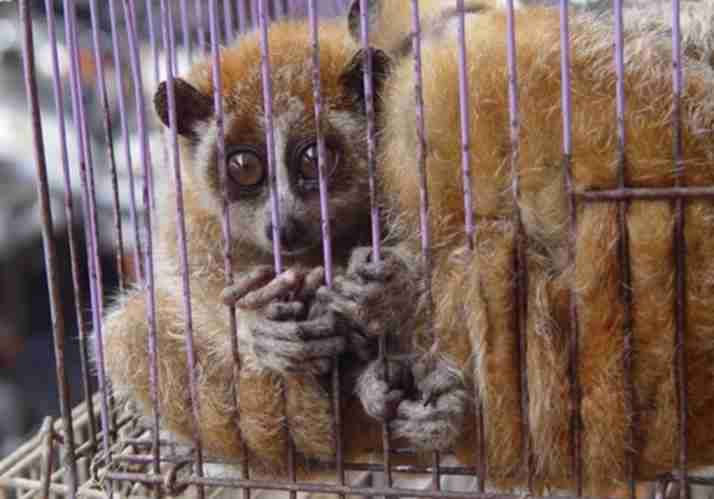
International Alliance Against Health Risks in Wildlife Trade Report Highlights Human Health, Economic, Animal Welfare, and Biodiversity Risks
“Pandemic prevention cannot begin after a disease outbreak has already started. The most effective and affordable approach is to reduce the conditions that allow dangerous pathogens to emerge and spread in the first place.”—WCS Executive Director of Health Chris Walzer.
BRONX, NY, June 11, 2026 [VoM News]: A new white paper released by the International Alliance against Health Risks in Wildlife Trade warns that the global trade in live wild animals continues to create conditions that can fuel the emergence and spread of zoonotic diseases and future pandemics.
The report, “Live Wildlife Trade and Markets,” examines how the capture, transport, sale, and keeping of live wild animals can increase opportunities for pathogens to move between wildlife, domestic animals, and people. The paper was developed by the Alliance’s Working Group on Transformative System Change and includes Wildlife Conservation Society (WCS) Executive Director of Health Dr. Chris Walzer among its authors.
The report emphasizes that zoonotic disease risks are not limited to illegal wildlife trade. Legal and illegal trade alike can create conditions that favor pathogen transmission when wild animals are removed from their natural habitats, transported long distances, mixed with other species, and brought into close contact with people.
“Pandemic prevention cannot begin after a disease outbreak has already started,” said Dr. Chris Walzer, Executive Director of Health at WCS and a co-author of the report. “The most effective and affordable approach is to reduce the conditions that allow dangerous pathogens to emerge and spread in the first place. That means addressing risks throughout wildlife trade chains before they become global public health crises.”
According to the report, nearly three-quarters of emerging infectious diseases affecting people originate in animals, with many originating in wildlife. The authors note that the COVID-19 pandemic demonstrated the enormous human and economic costs that can result when pathogens cross from animals into people. Beyond millions of deaths worldwide, the pandemic caused trillions of dollars in economic losses and long-term health impacts that continue today.
For More Press Releases, Visit Here
The paper argues that prevention measures are significantly less expensive than responding to outbreaks after they occur. Investments in reducing wildlife-trade-related disease risks, improving surveillance, strengthening regulations, and protecting ecosystems cost a fraction of the losses associated with future pandemics.
“The next pandemic is far more likely to be prevented in a forest, a marketplace, or a wildlife trade supply chain than in a hospital,” said Joe Walston, Executive Vice President for Global Conservation at WCS. “This report shows that protecting wildlife and reducing risky trade practices are essential investments in a safer future.”
Among the report’s key findings is the role of the international exotic pet trade, in which millions of animals move each year through complex international supply chains. The authors note that gaps in monitoring, health screening, and traceability can make it difficult to assess and manage disease risks. The report also concludes that existing legal and regulatory systems are often poorly aligned with disease prevention goals.
To reduce future risks, the authors recommend stronger prevention-oriented policies, including improved surveillance, health screening, quarantine measures, traceability systems, hygiene standards, enforcement, public education, and demand-reduction efforts where wildlife use is discretionary or driven by commercial markets.
The report stresses that solutions must be fair and practical, recognizing that some communities rely on wildlife for food security and livelihoods. At the same time, it argues that such considerations should not be used to justify large-scale commercial wildlife trade that increases risks to people, animals, and ecosystems.
“Being prepared for the next pandemic is essential, but preparedness should never be confused with prevention,” said Dr. Walzer. “The most effective and cost-efficient approach is to reduce the risk of pathogen spillover before local outbreaks become regional epidemics or global pandemics.”
The International Alliance against Health Risks in Wildlife Trade is a global coalition of experts and organizations working to reduce health risks associated with wildlife trade while supporting biodiversity conservation, animal welfare, and sustainable development.
About the Author

VoM News Desk -is an online web portal in jammu Kashmir offers regional, National & global news.
Latest Posts
- Around 2.7 Lakh Students to Appear in JKBOSE Class 10, 11 and 12 Exams19 Oct 2026
- Trump Accuses Volodymyr Zelensky of Blocking Russia-Ukraine Peace19 Oct 2026
- Father-Son Duo Arrested for Alleged Murder of SPO in Kishtwar, Land Dispute Suspected19 Oct 2026
- Microsoft Announces $50 Xbox Nano Controller, Launch Set for Next Month19 Oct 2026
- OnePlus 16 Global and Indian Variants Reportedly Under Testing With Three Model Numbers19 Oct 2026
- US-Designated Global Terrorist Muhammad Sarwar Dies in Lahore19 Oct 2026
- Three Suspects in Tiger Shroff Firing Case Caught at Kota Railway Station19 Oct 2026
- Srinagar-Bound Bus Attacked in Haryana, Two Held; Omar Abdullah Seeks Strict Action19 Oct 2026
- Trump Endorses Netanyahu Ahead of Israel’s October 27 Election19 Oct 2026
- Venezuela Opposition Parties Choose Nobel Laureate Maria Machado As Leader19 Oct 2026