 Follow on Google News
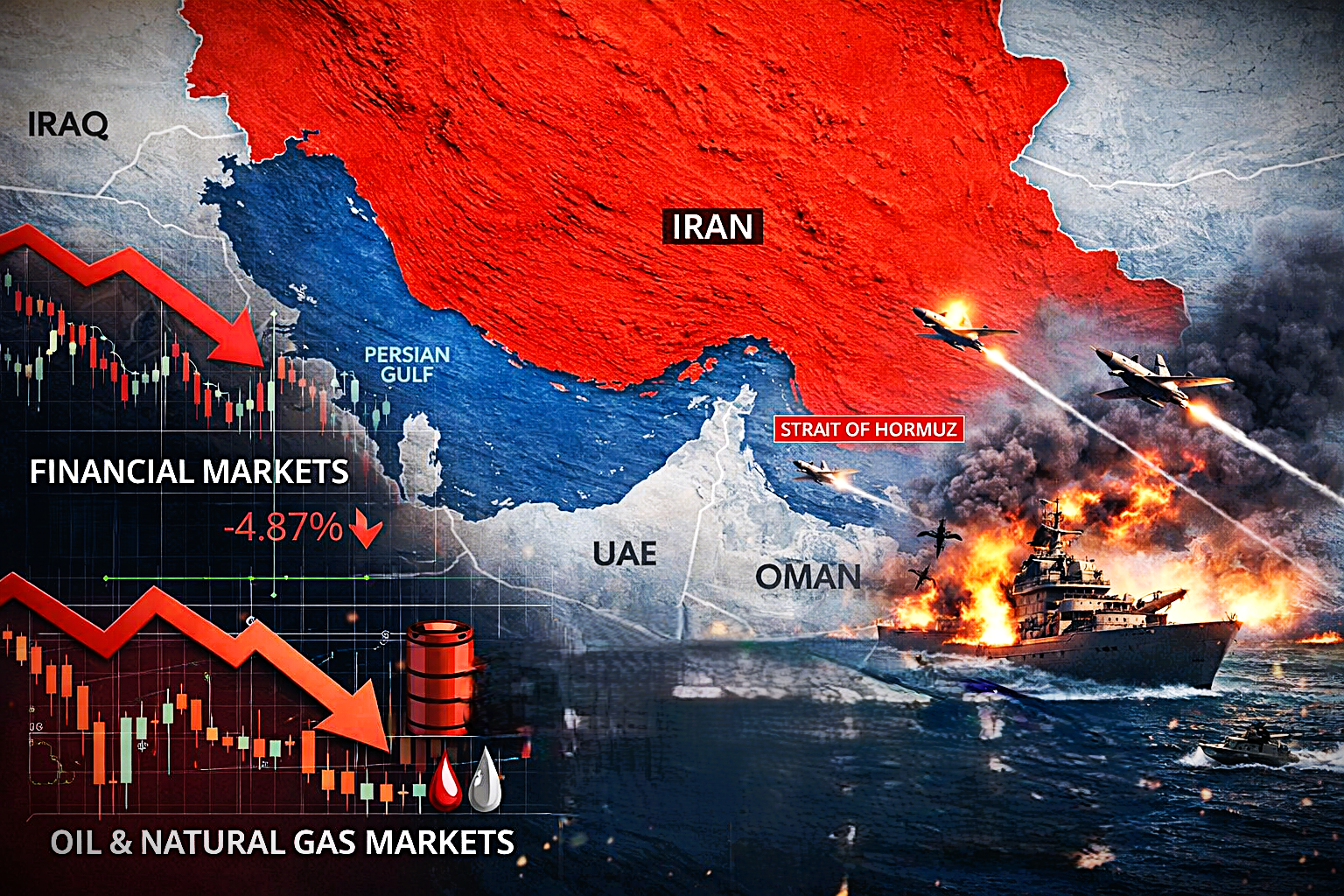
Miscalculation in the Gulf: How a U.S.–Israel War with IRAN Could Reshape the Middle Eastern and Global Economy
Abstract
Military escalation involving Iran, Israel, and the United States represents one of the most consequential geopolitical risks facing the global economic system. The Persian Gulf region lies at the heart of global energy supply and maritime trade, making any large-scale conflict there capable of producing systemic economic shocks.
This study examines how a war in the Gulf could destabilize the economic architecture of the Middle East while simultaneously transmitting inflationary and recessionary pressures throughout the global economy. Particular attention is given to the vulnerability of energy markets, international shipping routes, foreign investment flows, and real estate markets across Gulf states.
The thesis argues that military escalation in the region may represent a strategic miscalculation whose economic consequences extend far beyond the immediate battlefield.
1. Introduction
Since the end of World War II, the international economic system has been built on relative geopolitical stability and the smooth functioning of global trade routes.
The Middle East occupies a uniquely sensitive position in this system. It controls a substantial portion of the world’s energy resources while simultaneously serving as a strategic transit corridor between Asia, Europe, and Africa.
For decades, policymakers and investors have assumed that although the region experiences periodic political tensions, the broader economic structure would remain intact.
However, a direct war involving Iran could fundamentally challenge this assumption.
The Persian Gulf is not merely a regional theatre of geopolitical rivalry—it is one of the central arteries of the global economy. Through the narrow waters of the Strait of Hormuz, nearly one-fifth of the world’s oil supply moves every day, making the stability of this corridor essential for global energy security.
In such a fragile strategic environment, military confrontation between the United States, Israel, and Iran carries risks that extend far beyond regional politics. A war in the Gulf would threaten energy infrastructure, disrupt maritime trade routes, and undermine decades of economic transformation across the Middle East.
Recent economic analysis warns that escalation in the region could sharply reduce global growth and push energy prices dramatically higher, potentially destabilizing economies across Europe and Asia.
What may begin as a military campaign aimed at strategic deterrence could therefore evolve into a broader economic crisis with global repercussions.
2. The Gulf Economic Transformation
Over the past four decades, Gulf States have undertaken an unprecedented economic transformation.
Cities such as:
- Dubai
- Abu Dhabi
- Doha
- Riyadh
have emerged as global centers for finance, tourism, logistics, and real estate investment.
The economic model of the Gulf region is built upon several pillars:
- Political stability
- Open financial markets
- Foreign labor mobility
- Global connectivity
A regional war would threaten each of these pillars simultaneously.
3. Real Estate and Capital Flight
Real estate markets in the Gulf are among the most internationally integrated in the world.
Property sectors in cities such as Dubai rely heavily on foreign investors from:
- Europe
- Russia
- China
- South Asia
In times of geopolitical tension, global capital typically seeks safer jurisdictions.
Historical precedents demonstrate that real estate markets in conflict-adjacent regions are particularly vulnerable to sudden corrections.
If war spreads across the Gulf region, several developments could occur:
- Rapid capital outflows
- Decline in property values
- Reduction in luxury tourism
- Slowdown in new construction projects
Given the central role of real estate in the Gulf economic model, such developments could significantly weaken regional growth.
4. Industrial Investment and Economic Diversification
Recognizing the long-term risks of dependence on hydrocarbons, Gulf governments have launched ambitious economic diversification programs.
These include:
- Saudi vision 2030
- Advanced logistics hubs in the dubai metropolitan area
- Technology and manufacturing initiatives across the region
However, large-scale industrial investments require long-term stability.
A major regional conflict would increase:
- Insurance costs
- Financing risks
- Supply chain uncertainty
International corporations are generally reluctant to invest in regions experiencing prolonged geopolitical instability.
5. Energy Markets and Global Economic Transmission
The most immediate global consequence of a conflict involving Iran would be disruption to energy markets.
A critical vulnerability lies in the Strait of Hormuz, through which approximately one-fifth of global oil supply passes.
Any disruption to this maritime corridor could trigger a severe oil price shock.
Historically, oil price spikes have been associated with global economic downturns, including the crisis following the 1973 oil crisis.
A similar energy shock today would likely generate:
- Global inflation
- Reduced economic growth
- Financial market volatility
6. Financial Markets and Global Risk Perception
Financial markets react rapidly to geopolitical uncertainty.
A war involving Iran would likely trigger:
- Volatility in global stock markets
- Surges in energy prices
- Flight to safe-haven assets such as gold and government bonds
In addition, international shipping insurance costs could rise sharply, affecting trade flows across multiple sectors.
The interconnected nature of the modern global economy means that regional conflict can produce far-reaching economic consequences.
7. Strategic Miscalculation
The central thesis of this analysis is that a military strike on Iran may represent a strategic miscalculation.
Although the intended objectives might include:
- Limiting Iran’s regional influence
- Strengthening deterrence
- Reshaping regional power dynamics
The unintended consequences may prove far more significant.
These could include:
- Economic destabilization across the Gulf region
- Long-term damage to investor confidence
- Disruption of global energy markets
- Acceleration of geopolitical fragmentation
Military success does not necessarily translate into geopolitical stability.
8. Implications for the Global Economic Order
A prolonged conflict could accelerate structural shifts in the international system.
Possible outcomes include:
Fragmentation of globalization
Countries may reduce reliance on distant supply chains.
Rise of regional economic blocs
Emerging powers such as China and Russia may strengthen alternative economic alliances.
Energy transition acceleration
High oil prices could accelerate the shift toward renewable energy and nuclear power.
Conclusion
The potential conflict involving Iran, Israel, and the United States represents far more than a regional military confrontation. It carries the risk of undermining the economic foundations upon which the modern Middle East has built its prosperity over the past several decades. At the same time, such a conflict could transmit powerful economic shocks throughout the global system, affecting energy markets, financial stability, and international trade.
The Middle East today is not merely a geopolitical theater of rivalry. It is a central artery of the global economy—linking energy supplies, maritime trade routes, financial investment, and large-scale infrastructure development. Any large-scale military escalation in this region therefore has consequences that extend far beyond the immediate battlefield.
For this reason, the countries of the region must recognize the urgency of acting before strategic miscalculations produce irreversible consequences. The preservation of peace, prosperity, and long-term economic stability requires stronger regional coordination and a more unified strategic vision among Middle Eastern states.
Regional stability cannot depend solely on the strategic calculations of external powers. Instead, the countries of the region must increasingly take responsibility for shaping their own security architecture and economic future. Greater cooperation among regional states, combined with balanced engagement with global powers such as China and Russia, may help create a more stable and diversified geopolitical environment.
Such a balanced strategic approach could reduce excessive external influence and allow regional actors to pursue policies that prioritize long-term economic development, security, and diplomatic stability.
History repeatedly demonstrates that wars initiated with limited strategic objectives often produce consequences far beyond the intentions of those who initiate them. In an interconnected global economy, regional conflicts rarely remain regional in their effects.
If miscalculation prevails over diplomacy, the consequences will extend far beyond the Middle East—threatening the stability of global markets, the security of energy supplies, and the economic future of entire regions.
Strategic restraint, diplomatic engagement, and responsible regional leadership are therefore not signs of weakness. They are the essential foundations upon which lasting peace, economic prosperity, and global stability must ultimately be built.
The Middle East stands today at a historic crossroads. The decisions made in this moment will determine not only the future of the region but also the stability of the global economic order for decades to come.
If you want, I can also format this like a professional journal article (APA / academic paper style with proper section spacing, margins, and title page) so it looks ready for publication or PDF submission.

Latest Posts
- Trump Spoke With Pakistan Army Chief Asim Munir Before Tehran Visit: Report
August 25, 2026 | Breaking News, Politics, World - Fake Air India Job Call Centre Busted in Delhi, Three Arrested
August 24, 2026 | Breaking News, India - CJP Announces September 5 March Over ‘Unfulfilled’ NEET Protest Commitments
August 24, 2026 | Breaking News, India, Politics - World Humanoid Robot Games : Chinese Robot Tiangong Ultra Usain Bolt’s 100m Record
August 23, 2026 | Breaking News, Science & Technology, World - Hindu Trader Rakesh Kumar Shot Dead in Balochistan Province of Pakistan
August 23, 2026 | Breaking News, Pakistan News, World - Canada PM Mark Carney Rejects US Trade Deal, Vows Dollar-for-Dollar Tariff Retaliation
August 23, 2026 | Breaking News, Politics, World - Anthropic IPO Could Rival SpaceX
August 23, 2026 | AI & ML, Breaking News, Business - ISRO Targets First Gaganyaan Uncrewed Mission Within Four Months, Sets Out Ambitious Space Roadmap
August 23, 2026 | Breaking News, Science & Technology, Technology - Ukraine Sanctions Masha and the Bear Producers, Calls Cartoon Russian Propaganda | Russia Denies
August 22, 2026 | Breaking News, Russia-Ukraine Conflict, World - OpenAI Drops GPT-5.6 Sol API Prices By More Than 20% As AI Competition Hots Up
August 22, 2026 | AI & ML, Breaking News, World