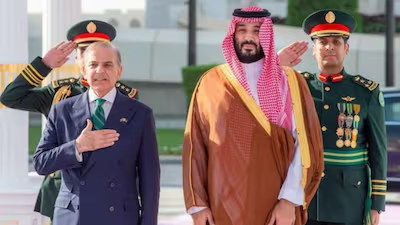
Is Pakistan Ready to Step In as Middle East Tensions Escalate with Saudi Arabia?
ISLAMABAD, March 4 – A recent Iranian drone strike in Saudi Arabia has reignited speculation about Pakistan’s potential involvement in the escalating Middle East conflict, highlighting the strategic implications of a 2025 defence pact with Riyadh.
The Strategic Mutual Defence Agreement (SMDA), signed in September 2025, commits both countries to a coordinated response if either is attacked. However, the details of how far Pakistan’s obligations might extend—including the controversial possibility of a nuclear component—remain unclear.
Foreign Minister Ishaq Dar issued a pointed warning to Tehran on Tuesday, emphasizing Islamabad’s commitment under the pact. “I made them understand that we have a defence agreement,” Dar told the Financial Times, marking the first public acknowledgment of Pakistan’s stance amid the ongoing US-Israel airstrikes on Iran.
Analysts note that the SMDA links a nuclear-armed Muslim state with one of the Gulf’s wealthiest nations, raising questions about regional security dynamics. While Pakistan has not confirmed whether the agreement includes nuclear protection for Saudi Arabia, the pact has already fueled debate about precedent and international law.
“The pact sets a precedent for extended deterrence by a nuclear-armed state outside the framework of the Nuclear Non-Proliferation Treaty (NPT),” said a report by the International Campaign to Abolish Nuclear Weapons (ICAN), citing analysts at London-based think tank Chatham House. The report warned that, even without explicit nuclear references, the agreement could challenge established norms under the NPT and the UN Treaty on the Prohibition of Nuclear Weapons (TPNW).
Experts believe that, for now, Pakistan is likely to limit its involvement to diplomatic and strategic support rather than direct military engagement. The warning delivered by Dar could serve to bolster Saudi Arabia’s regional posture without committing Pakistani forces to active combat.
Riyadh’s interest in diversifying its security partnerships reportedly intensified after Israeli strikes on Qatar in September 2025, which raised concerns over Washington’s ability to guarantee Gulf security. The SMDA with Pakistan, analysts say, is part of a broader strategy to strengthen deterrence against potential Iranian aggression.
US Has Bombed at Least 10 Countries Since 9/11 — And the Count Keeps Growing in 2026
For now, the Pakistani government has maintained ambiguity. No official statement confirms whether the nuclear umbrella extends to Saudi Arabia, leaving regional observers to weigh the implications of the pact for future Middle East crises.
About the Author

Dil Bar Irshad is an Indian journalist, writer, and media entrepreneur from the Marmat area of Doda in Jammu and Kashmir, India. He is best known as the founder and Editor-in-Chief of VoM News ("Voice of Masses"), a digital news portal dedicated to highlighting public grievances and citizen issues. Career Overview • Early Career (2015–2016): He began his reporting career focusing on local public issues and citizen grievances in Jammu and Kashmir. • Regional & National Journalism: Over the years, he served as a District Correspondent for the English newspaper Khalsa Express News (2019–2020) and worked as an Urdu correspondent for Sada e Kohistan. He also reported as a J&K Correspondent for the Millennium Post. • International Reporting: In 2023, he expanded into international journalism, working as an India Correspondent for global agencies like BNN Breaking and later TrimFeed, covering diverse topics ranging from stock market updates to regional and global geopolitical developments. • Media Associations: He is an active member of the All India Media Association. Seen IN: Editor-in-Chief, VoM News India, Jammu and Kashmīr Business and Finance, Crime and Justice, Environment As seen in: VoM News, MSN, MSN India, MSN Singapore, MSN UK, Youth Ki Awaaz, Millennium Post, AgroPages, The California Courier, Hecho En California, Justice News, The Chenab Times, Niguro, Sisnoo
Latest Posts
- Repeated Cattle Theft Alone Cannot Justify PSA Detention: Jammu and Kashmir and Ladakh High Court26 Oct 2026
- One of the craziest turnarounds in the history of ODI cricket as Pak Steals Thriller in Tri-nation Series Against England by Shadab’s Splendid 113*(96)26 Oct 2026
- Are Iran-Pakistan Borders Still Open for Bilateral Trade? What Iranian Ambassador To Pakistan Reza Amiri Moghadam Said !!26 Oct 2026
- BREAKING: Death Toll in Gaza Rises to 826 Oct 2026
- Renewed War Will Not Change Iran’s Position, Tehran Rules Out Talks Without Conditions: Foreign Minister Abbas Araghchi25 Oct 2026
- Dakar Rally 2027 Cancelled in Saudi Arabia Amid Regional Tensions25 Oct 2026
- Iran Parliament Speaker Mohammad Bagher Ghalibaf Calls for 10% Cut in Gas Consumption Ahead of Winter25 Oct 2026
- Oppo Reno 17 Series India Launch Timeline, Chipsets Tipped25 Oct 2026
- Samsung W27 Design Leaked 25 Oct 2026
- PM Netanyahu Shares AI-Generated Nuclear Explosion Image Over Tel Aviv Ahead of Israel Elections, Yair Golan Accuses Him of Fearmongering25 Oct 2026