 Follow on Google News
Trump Rejects Iran’s 7-Day Ceasefire Plan, Expects Strikes Could Resume After US Midterms: WSJ Report
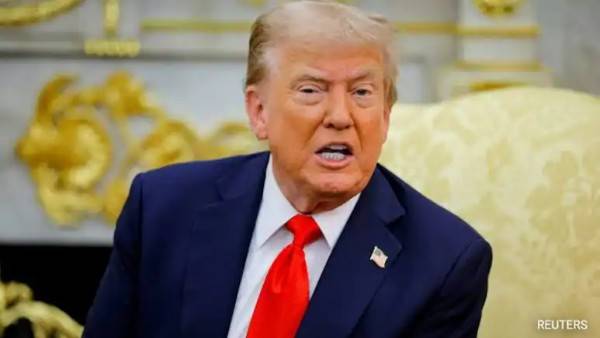
Have you been dying to know what’s really happening in the world of international relations? Want to get in a little bit of the gossip? Here’s a little tidbit for you: Donald Trump has shot down Iran’s bid for a one-week ceasefire, and The Wall Street Journal reports that the US president has quietly told his advisers that he is contemplating launching airstrikes on Iran as soon as the midterm elections are over in November.
So, what’s the deal with that? Iranian Foreign Minister Abbas Araghchi said the country had submitted a “concrete” plan via Qatar. The plan was to reopen the Strait of Hormuz and restart negotiations on Iran’s nuclear program. Seems simple enough?
The Iranian plan proposed that after one week, as soon as the US was willing to accept certain demands – including open sea lanes, the end of a US naval blockade against Iranian ports, and a promise of a ceasefire to last a week in Lebanon, – Iranian maritime traffic would be free to resume.
Araghchi was more direct: “We have established all the conditions for the opening of the strait and resumption of regular maritime traffic, in less than a week, if the United States decided so,” he told the UN Friday.
Here’s the thing: The concessions Iran seeks are derived from an agreed memorandum of understanding shared by the US and Iran in June. But Trump? He remains unconvinced. The Wall Street Journal reports that he is unsure if Iran will comply with US demands and may resort to military strikes after the elections if required.
The Trump administration has always said the US will not accept Iran developing a nuclear weapon. The two countries are still divided on what to do next in the negotiations, with Iran wanting to remove the military and economic sanctions and the US wanting to hold nuclear discussions as part of the negotiations.
Despite the present deadlock, diplomatic backchannel chatter continues. A senior US official said Washington was having “positive” and “constructive” indirect talks with Iran and even discussing the nuclear issue.
Iranian President Masoud Pezeshkian expressed Iran’s willingness to come back to the June package, and added that the process of ceasefire can start once the US adopts the plan.
Why does the Strait of Hormuz matter? Of course, the Strait of Hormuz is vital to the world’s energy supply, and reopening it will be a significant element of the international effort to de-escalate the conflict and restore the flow of oil and ships. Will there be peace, or are we doomed to keep fighting? Only time will tell.

Latest Posts
- Principal Accounts, Pay and Accounts Offices to Remain Open on Sunday AHEAD of 3-Day Bank Strike
September 26, 2026 | Breaking News, Business, Jammu Kashmir - Nagaland Liquor Tragedy Claims 19 Lives
September 26, 2026 | Breaking News, India - 3 Killed in Lucknow-Agra Expressway Crash
September 26, 2026 | Breaking News, India - AI Voice Scam Targets Italy’s Fideuram Bank; How Much Money Recovered ?
September 26, 2026 | AI & ML, Breaking News, World - India Responds to Shehbaz Sharif at United Nations General Assembly, Demands Pakistan ‘Terrorism Will Not Be Tolerated’
September 26, 2026 | Breaking News, India, Politics - Three NDA Allies Seek Election Commission of India Clarification Over SIR Row, Stress Public Trust
September 26, 2026 | Breaking News, India, Politics - Saudi Arabia Says Two Houthi Drones Intercepted Near Riyadh
September 26, 2026 | Breaking News, World - Bill to Ban Toxics in Plastic Beverage Bottles Introduced in U.S. Senate
September 26, 2026 | Press Release - Hindus for Human Rights Co-Founder Sunita Viswanath Arrested in Mass Protest Against Netanyahu at the United Nations
September 26, 2026 | Press Release - East Turkistanis Join Tibetans in WH Protest Against Xi Jinping
September 26, 2026 | Press Release, World