
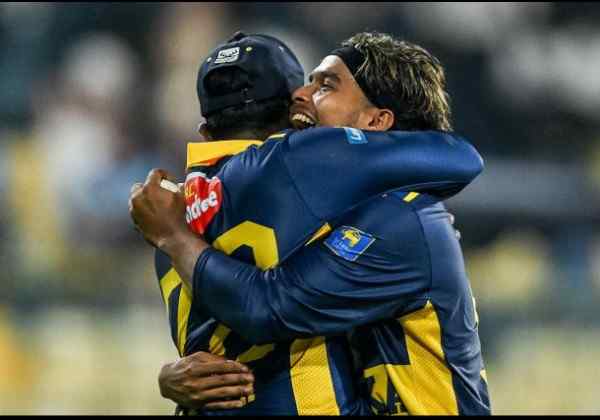
Sri Lanka produced an outstanding batting performance to chase down England’s massive total of 429 runs and secure a two-wicket victory in the ODI tri-series clash at Rawalpindi Cricket Stadium on October 22.
The thrilling encounter ended with Sri Lanka reaching 430/8 in 49.5 overs, completing the second-highest successful run chase in men’s One Day International cricket.
The match also witnessed a record-breaking double century from England captain Harry Brook, whose remarkable innings could not prevent his team from suffering defeat.
Harry Brook’s Historic Innings Takes England to 429
England set a challenging target after posting 429/4 in their allotted 50 overs. Captain Harry Brook led the scoring with a brilliant 202 off 116 deliveries, hitting 21 fours and 10 sixes.Brook became the first English batter to score a double century in men’s ODI cricket.
His innings surpassed the previous highest individual score by an English batter in the format.Joe Root added 69 runs from 66 balls, while Will Jacks provided a late boost with an unbeaten 66 off just 30 deliveries.
England appeared to have established a commanding position before Sri Lanka began their chase.
Pavan Rathnayake Anchors Sri Lanka’s Run Chase
Sri Lanka faced early pressure after losing two wickets for just 24 runs. However, Pavan Rathnayake and Avishka Fernando rebuilt the innings with an important partnership that brought the team back into contention.
Rathnayake scored 130 runs from 106 balls, including 15 fours and three sixes. Fernando narrowly missed a century, contributing 97 runs from 83 deliveries.
Dasun Shanaka then delivered an aggressive innings of 97 from just 50 balls, keeping Sri Lanka within striking distance of the target. His attacking approach proved crucial as the required runs began to come down rapidly.
Janith Liyanage Finishes the Match with a Six
The contest went down to the final over, where England briefly regained hope by taking two wickets in consecutive deliveries.
With six runs required from the final two balls, Janith Liyanage held his nerve and struck a six off Josh Tongue to seal the victory. Liyanage finished unbeaten on 61 from 27 deliveries, completing one of the most dramatic finishes of the tournament.
Sri Lanka reached 430/8 in 49.5 overs to win by two wickets, leaving England unable to defend its huge first-innings total.
A Major Milestone in ODI Cricket
Sri Lanka’s successful chase of 430 runs ranks second on the list of the highest successful run chases in men’s ODI history, behind South Africa’s chase of 438 against Australia in 2006.
The match produced a combined total of 859 runs, making it one of the highest-scoring ODI contests ever played. Rathnayake’s century earned him the Player of the Match award for his decisive contribution to Sri Lanka’s victory.
The result gives Sri Lanka valuable momentum in the Pakistan ODI tri-series, while England will need to improve its bowling performance in its remaining matches.
Despite Brook’s extraordinary individual achievement, Sri Lanka’s collective batting effort ultimately decided the outcome.
About the Author

Asif Iqbal is a seasoned news writer with a passion for delivering the latest updates to the public. Currently serving as the senior writer at VoM News, a prominent news outlet known for its comprehensive coverage of diverse topics, Asif has established himself as a reliable source of information. With a keen eye for detail and a knack for storytelling, he consistently provides readers with well-crafted articles that cover a wide range of news categories. His dedication to journalistic integrity and his commitment to staying ahead of the news curve make him an invaluable asset to Vom News, ensuring that readers are always well-informed on the issues that matter most. You can find his work and stay updated on current events by visiting vomnews.in.
Latest Posts
- 7.0 Magnitude Earthquake Strikes Tibet Weeks After Deadly Flash Floods22 Oct 2026
- Harry Brook Creates ODI History With Fastest Double Century Off 114 Balls; Sri lanka Smudges England22 Oct 2026
- Jammu Kashmir High Court Allows Regular Engagement of Casual Workers Who Donated Land for Tube Wells22 Oct 2026
- Adani Total Gas Q2 Profit Rises 3% To Rs 167 Crore, Revenue Up 34%22 Oct 2026
- 6 Killed, 40 Injured As Bus Crashes Into Tree In Chhattisgarh22 Oct 2026
- Indian Among 2 Killed In Attack On Saudi Airport, 2 Others Injured22 Oct 2026
- Swedfund invests USD 35 million to accelerate climate action and resilience in India21 Oct 2026
- JKBOSE Sub-Office Doda Bars Supervisory Staff From Carrying Mobile Phones During Class 10, 11 and 12 Exams, issues Circular21 Oct 2026
- Kishtwar ACD Rejects Ex-DDC Member’s Allegations of Delay in Complaint Inquiry, Cites Non-Cooperation21 Oct 2026
- Australian Lawmaker Helen Haines Loses Both Legs After Alleged Targeted Car Attack21 Oct 2026