 Follow on Google News
Original 1816 Sugauli Treaty Document May Be Missing, Nepal’s Foreign Minister Shisir Khanal Tells Nepal Parliament
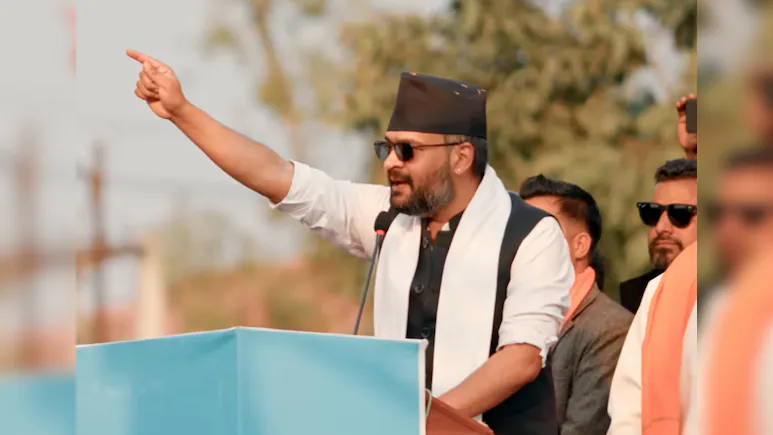
Nepal may have lost the original documents of the 1816 Sugauli Treaty. Nepal’s Foreign Minister Shisir Khanal has indicated on the floor of Nepal’s Parliament’s lower house (House of Representatives or Pratinidhi Sabha) that the government cannot confirm if it possesses the original document of the 1816 Sugauli Treaty.
While some papers exist in the National Archives, extensive searches across state departments failed to locate the definitive, original signed document, the minister confirmed.
“The Government of Nepal does not have clear information on whether we possess the official treaty documents. There are records showing that some documents related to certain treaties are kept at the National Archives. But we do not have clear information as to whether those are the actual official treaties,” Khanal said.
In 2019, Nepal’s then Foreign Minister, Pradeep Gyawali had said that Nepal possessed copies of the treaties.
The 1816 Sugauli Treaty, signed with British-ruled India (East India Company) after the Anglo-Nepalese War from 1814-1816 forms the fundamental legal basis for Nepal’s modern territorial claims. The signatories of the treaty were Lieutenant Colonel Paris Bradshaw on behalf of the East India Company and Raj Guru Gajraj Mishra on behalf of the ruler of Nepal, King Girvan Yuddha Bikram Shah.
However, the Sugauli Treaty is a pre-independence document and since India gained independence it has been conducting foreign relations with Nepal largely on the basis of other documents as well while the Sugauli Treaty remains a key foundational document.
Today the India-Nepal border is managed through the Indo-Nepal Treaty of Peace and Friendship (1950) and technical documents produced by joint bilateral working groups.
The main dispute along the border is over the ‘Kalapani’ region in the Greater Himalayas which is within India’s borders. When the Home Ministry issued new maps in 2019, Nepal objected to the map, claiming it identifies the region as ‘an unsettled territory of the Darchula district’ within Nepal’s Sudurpashchim province.
The India-Nepal border dispute has intensified after the India-China agreement to reopen the Lipulekh Pass trade route. Nepal claims that Lipulekh, Limpiyadhura and Kalapani are its territories, whereas India says that the territories are a part of India.
In June this year, Nepal Prime Minister Balen Shah claimed that the Himalayan nation had also encroached on Indian territory despite Kathmandu’s consistent complaints about alleged Indian encroachment.
Nepal’s Foreign Affairs Ministry reiterated that Nepal’s official position regarding disputed border areas, including Limpiyadhura, Lipulekh and Kalapani, remains unchanged and that unresolved border issues would be addressed through diplomatic dialogue and mutual understanding with India.
In subsequent statements, Nepal has indicated that it is seeking to resolve the issue rather than prolong it, clearly stating it wants strengthen bilateral partnerships.
Speaking at the International Conference on China and South Asia in a Multipolar World: China-India-Nepal Trilateral Relations in an Evolving Regional Order, Nepal Foreign Minister Shisir Khanal said, “Nepal sincerely welcomes the continued development and prosperity of both our neighbours. We remain committed to further strengthening our longstanding bilateral relations with India and China independently, on the basis of sovereign equality, mutual respect, mutual benefit, and sensitivity to each other’s legitimate interests and concerns.”
“Nepal will continue to strengthen its bilateral partnerships with both India and China, recognizing the immense value of these longstanding relationships founded on friendship, mutual respect, and mutual benefit. At the same time, Nepal remains firmly committed to promoting regional and sub-regional cooperation that advances connectivity, facilitates commerce, expands markets, and contributes to sustainable development,” Khanal added.

Latest Posts
- Kishtwar Rape Case; Accused Teacher Dismissed from Service
September 21, 2026 | Breaking News, Jammu Kashmir, Kishtwar - AI Ready School Launches National Research Programme to Measure AI’s Impact on Indian K–12 Education
September 21, 2026 | AI & ML, Breaking News, India, Press Release - MP’s Mandate Is to Be J&K’s Voice, Not Destabilise NC Govt: NC MLA Javed Beg on MP Aga Ruhullah
September 21, 2026 | Breaking News, Jammu Kashmir, Politics - Young Star Cricket Club Doda Announces Free Cricket Trials Across India
September 20, 2026 | Breaking News, Doda, Jammu Kashmir, Sports - Houthis Say Saudi Arabia Targeted Yemen With 26 Strikes In 24 Hours
September 19, 2026 | Breaking News, World - BREAKING: US Clears Multibillion-Dollar Air Defence Sale to Kyiv
September 19, 2026 | Breaking News, World - Fire Reported Near Riyadh Airport in Saudi Arabia Amid Yemen Fighting
September 19, 2026 | Breaking News, World - Leading British-Pakistani consultant Urologist Dr Muhammad Shabi Ahmed honoured for advancing urology and supporting disadvantaged patients in Pakistan
September 19, 2026 | Breaking News, World - Fincom raises $20m to make remittances faster and cheaper
September 19, 2026 | Business, World - Delhi Police Bust 3 Fake International Call Centres, 23 Arrested
September 18, 2026 | Breaking News, India, Politics