 Follow on Google News
Jammu Kashmir & Ladakh High Court Quashes Dismissal of JMC Official, Orders Pension and Benefits
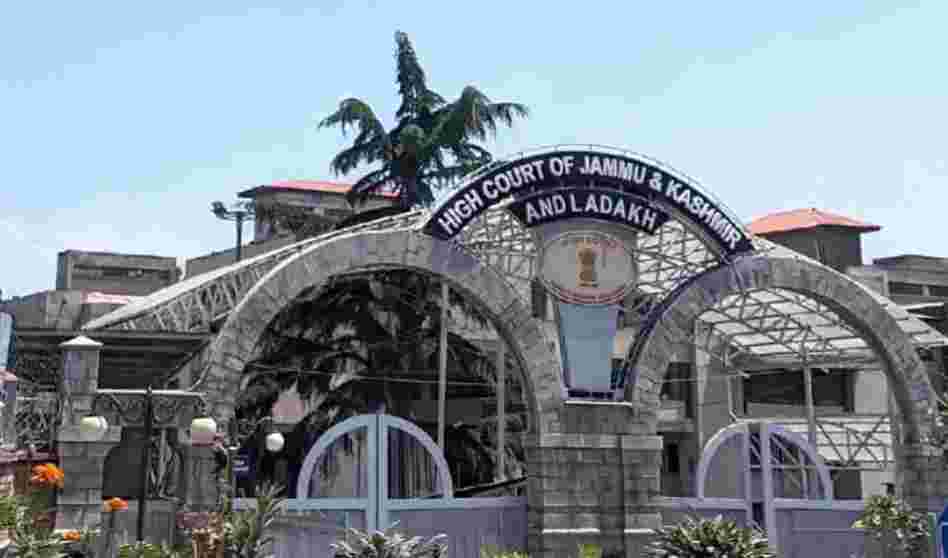
SRINAGAR: The High Court of Jammu Kashmir and Ladakh has set aside the dismissal of a Jammu Municipal Corporation (JMC) official, holding that the departmental enquiry against him was vitiated by procedural lapses and violation of principles of natural justice, and directing authorities to process his pension and consequential benefits.
In a detailed judgment pronounced on March 25, 2026, Justice Sanjay Dhar allowed a writ petition filed by Gopal Krishan, a former Enforcement Inspector with the JMC, who had challenged his dismissal from service ordered on May 20, 2020. The petition, registered as WP(C) No. 1776/2020, had been reserved for judgment on March 12.
The case stemmed from allegations of dereliction of duty during the petitioner’s tenure as Enforcement Inspector for Wards 51 to 54 in Jammu between February and July 2019. A complaint dated June 18, 2019, lodged by a corporator of Ward No. 53, accused him of failing to act against unauthorised constructions in the area. This triggered a preliminary enquiry, followed by a detailed departmental probe that ultimately led to his dismissal.
Representing the petitioner, senior advocate Abhinav Sharma, assisted by advocate Abhirash Sharma, argued that the entire enquiry process was fundamentally flawed and biased. Appearing for the respondents, advocate Mayank Gupta defended the action taken by the municipal authorities, maintaining that due procedure had been followed.
The petitioner contended that the enquiry violated core principles of natural justice. It was argued that the disciplinary authority had assumed multiple roles—acting simultaneously as the Enquiry Officer and effectively as the prosecutor—thereby compromising the fairness of the proceedings. The petitioner also alleged that he was not given an opportunity to cross-examine witnesses, nor were key documents and reports relied upon in the enquiry furnished to him.
“The respondent No. 2 has acted as a prosecutor and an adjudicator in the present case,” the petitioner’s counsel submitted, adding that such a course of action “violates the principles of natural justice.”
The respondents, on the other hand, maintained that the enquiry was conducted in accordance with rules. They submitted that multiple complaints had been received regarding illegal constructions and that a detailed examination of official records and reports established that several unauthorised structures had come up during the petitioner’s tenure. According to them, the petitioner failed to report these violations in time, amounting to dereliction of duty.
After examining the record, the Court framed the central issue as whether the enquiry stood vitiated on account of bias and procedural irregularities, particularly in light of the disciplinary authority acting as the Enquiry Officer without appointing a Presenting Officer.
While noting that there is no absolute legal bar on a disciplinary authority acting as an Enquiry Officer, the Court emphasised that such an arrangement must still conform to the requirements of fairness and impartiality. Citing established legal principles, the Court observed that an Enquiry Officer functions as a quasi-judicial authority and must remain an independent adjudicator.
“A cardinal principle of natural justice is that no man shall be a judge in his own cause,” the Court noted, adding that the test is not whether bias actually existed, but whether circumstances created a reasonable apprehension of bias.
Applying these principles to the present case, the Court found multiple infirmities in the conduct of the enquiry. It noted that the disciplinary authority had not only acted as the Enquiry Officer but had also actively gathered evidence, recorded statements of witnesses, and relied upon materials that were neither disclosed to the petitioner nor tested through cross-examination.
“The circumstances clearly go on to show that respondent No. 2, while acting as the Disciplinary Authority, Inquiry Officer and the prosecutor combined, has approached the whole issue with a premeditated mind,” the Court held.
The Court further observed that statements of key witnesses were recorded “behind the back of the petitioner” and that he was not afforded any opportunity to cross-examine them. Additionally, reports obtained from officials such as the Senior Town Planner and Joint Commissioner were relied upon without being supplied to the petitioner.
On this basis, the Court concluded that the enquiry proceedings were fundamentally flawed. “The mandate of Rule 33 of the Rules of 1956 has been completely violated,” the judgment said, holding that both the enquiry report and the dismissal order could not be sustained in law.
Ordinarily, the Court noted, such a finding would warrant remanding the matter for a fresh enquiry. However, a crucial development altered the course of relief: the petitioner had already superannuated from service in October 2024.
Taking this into account, the Court held that no fresh enquiry could now be initiated, as the applicable rules did not permit continuation of disciplinary proceedings after retirement in the absence of financial loss to the employer.
“Once the relationship of employer and employee has ceased to exist, the enquiry proceedings cannot be initiated or continued afresh,” the Court observed.
Accordingly, the Court quashed both the enquiry proceedings and the dismissal order dated May 20, 2020, and directed the authorities to treat the petitioner as having remained in service until the date of his superannuation.
“The respondents are directed to process the case of the petitioner for grant of pension and consequential benefits as per rules,” the Court ordered.
The ruling underscores the judiciary’s emphasis on adherence to procedural fairness in disciplinary proceedings, particularly in cases involving severe penalties such as dismissal from service.

Latest Posts
- Pension Can Be Used to Recover Loan Dues After Credit, Rules Jammu Kashmir High Court
April 6, 2026 | Breaking News, Jammu Kashmir - No Right to Regularisation: Jammu Kashmir High Court Rejects Plea of 51 Daily Wagers in Khrew Cement Case
April 6, 2026 | Breaking News, Jammu Kashmir - Jammu Kashmir & Ladakh High Court Grants Pre-Arrest Bail to DDC Member in Doda Assault Case; Questions SC/ST Act Applicability
April 6, 2026 | Breaking News, Doda, Jammu Kashmir - Jammu Kashmir & Ladakh High Court Upholds Fatima Bano’s Selection as Anganwadi Worker, Sets Aside 2016 Judgment
April 6, 2026 | Breaking News, Jammu Kashmir - Jammu Kashmir Health Department Committee Recommends 2.5 Days Additional Pay for Non-Gazetted Employees
April 6, 2026 | Breaking News, Jammu Kashmir - Jammu Kashmir & Ladakh High Court Reinstates CRPF Constable Amit Kumar, Overturns 20-Year-Old Dismissal
April 6, 2026 | Jammu Kashmir - Majid Khademi, Iran’s Revolutionary Guards’ Intel Chief, Killed In US-Israel Strikes
April 6, 2026 | Breaking News, Politics, World - Middle East Tensions Surge as Israel Hits Iran’s Key Petrochemical Plant
April 6, 2026 | Breaking News, Politics, World - Iran Rejects US Ceasefire Proposal, Lists Demands In 10-Point Plan
April 6, 2026 | Breaking News, Politics, World - Israeli Airstrikes in Lebanon Kill 14, Injure Many
April 6, 2026 | Breaking News, World