
 Follow on Google News
Israel to Reopen Rafah Crossing for Limited Civilian Movement Amid Gaza Truce Push
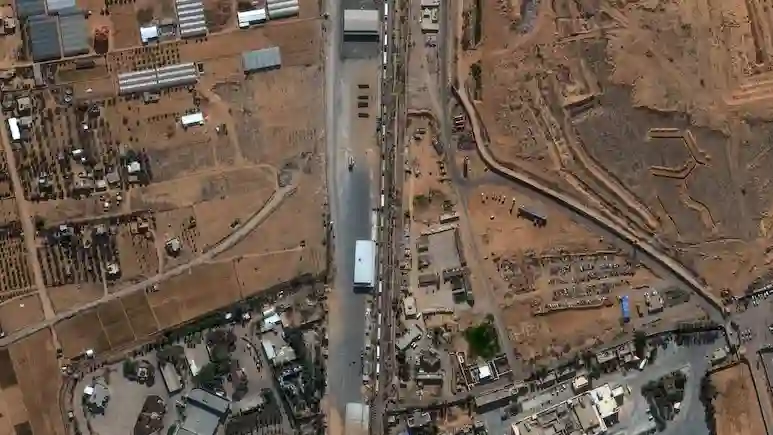
Israel has announced that it will reopen the strategically vital Rafah border crossing between Gaza and Egypt on Sunday, February 1, allowing restricted movement of people after months of closure, officials said on Friday. The decision follows sustained pressure from the United Nations, humanitarian agencies and Palestinians facing a deepening humanitarian crisis.
According to COGAT, the Israeli defence ministry body responsible for civil affairs in the occupied Palestinian territories, the crossing will operate “in both directions, for limited movement of people only.” Movement will be permitted in coordination with Egypt, subject to prior Israeli security clearance and under the supervision of the European Union monitoring mission.
The Rafah crossing, Gaza’s only gateway to the outside world not controlled by Israel, has largely remained shut since Israeli forces seized the area in May 2024, barring a brief reopening earlier this year. Its closure has severely constrained the movement of civilians and the flow of essential aid into the enclave.
The announcement comes amid calls from Hamas for an immediate transition to the second phase of the US-brokered ceasefire, which includes reopening Rafah and allowing a technocratic Palestinian committee to take charge of civilian administration in Gaza. Israel had earlier resisted reopening the crossing until the remains of the last Israeli hostage held in Gaza were returned — a condition fulfilled earlier this week.
Humanitarian groups have welcomed the move but cautioned that limited reopening may not be enough to address Gaza’s dire needs. International Committee of the Red Cross president Mirjana Spoljaric urged the global community to capitalise on the momentum of the ceasefire to ease restrictions on critical supplies such as water infrastructure and power equipment.
Despite the ceasefire being in place since October 10, tensions remain high. Israel and Hamas continue to trade accusations of violations, and Israeli forces reported overnight strikes targeting militants emerging from underground tunnels.
Phase two of the truce also envisages Hamas disarmament — a point of contention, as the group has described its weapons as a red line, though it has indicated conditional openness to handing them over to a Palestinian governing authority. The phase further calls for a gradual Israeli military withdrawal and the deployment of an international stabilisation force.
The reopening of Rafah is expected to facilitate the entry of a newly formed 15-member Palestinian technocratic body tasked with administering Gaza’s day-to-day affairs under an international framework.
Gaza’s humanitarian situation remains catastrophic, with most of its more than two million residents displaced and enduring harsh winter conditions with minimal shelter, sanitation or services. The conflict, triggered by Hamas’s October 7, 2023 attack on Israel, has devastated the territory, with Gaza’s health ministry reporting over 71,600 deaths — figures the United Nations considers credible.
While Sunday’s reopening marks a significant step, aid agencies stress that sustained access and broader easing of restrictions will be critical to preventing further humanitarian collapse.

Latest Posts
- India Space Push: ISRO Speeds Up Space Station Plans, 80 Satellites Lined Up
February 10, 2026 | Breaking News, Science & Technology, Technology - India Set to Clear Record ₹3.25 Lakh Crore Deal for 114 Rafale Jets Ahead of Macron Visit
February 10, 2026 | Breaking News, India - Tina Ambani Skips Probe Agency ED’s Summons In Money Laundering Case
February 10, 2026 | Breaking News, India - Sensex Rises by 247 Points In Early Trade, Nifty Up 80 Points
February 10, 2026 | Breaking News, Business - Muhammad Yunus Makes Clarion Call For ‘Yes’ Vote For Bangladesh Referendum
February 10, 2026 | Breaking News, Politics, World - Donald Trump Threatens To Stop Opening Of Canada-US Bridge Amid Trade Row
February 10, 2026 | Breaking News, Politics, World - Doda Police Register FIR, Detain Man Over Alleged Disrespect to National Flag
February 10, 2026 | Breaking News, Doda, Jammu Kashmir - UK PM Keir Starmer Refuses To Quit As Pressure Builds Over Epstein Files
February 10, 2026 | Breaking News, Politics, World - US Bolsters Military Presence in Middle East as Trump Warns Iran, Tehran Says It Is Not Intimidated
February 10, 2026 | Breaking News, Politics, World - US Military Bases In The Gulf Under Iran’s Ballistic Missile Shadow
February 10, 2026 | Breaking News, Politics, World