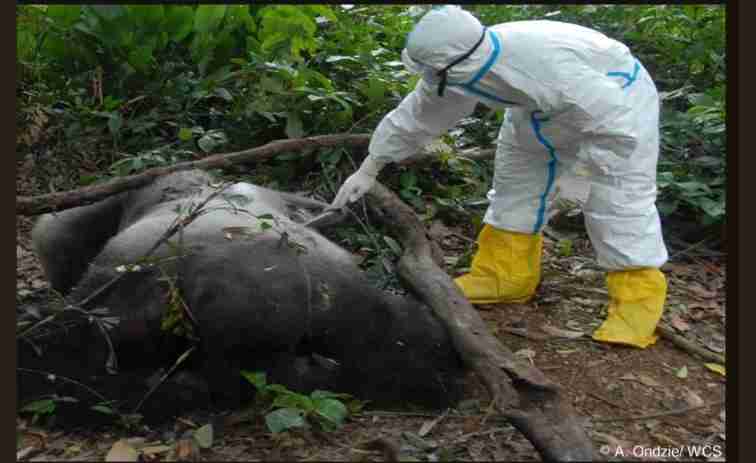
New Lancet paper calls for elevating spillover prevention ahead of 2026 UN High-Level Meeting
“This paper makes clear that pandemic prevention must start long before the first human case is detected,” said Chris Walzer, Executive Director of Health at WCS. “We have the scientific understanding to reduce spillover risk—by protecting ecosystems, regulating wildlife trade, and improving how livestock and people interact with nature. The challenge now is political will and sustained investment.”
The paper in Lancet looks ahead to the 2026 United Nations High-Level Meeting on pandemic prevention, preparedness, and response, to be held at UN Headquarters in New York during the UN General Assembly High-Level Week in September 2026, when heads of state and government convene to shape global health priorities.
Spillover events, which give rise to diseases such as COVID-19, Ebola, and avian influenza, are driven by a combination of environmental degradation, wildlife trade, agricultural expansion, and close contact between people, livestock, and wildlife.
The paper emphasizes that reducing these risks at their source is both more effective and more cost-efficient than responding after a pathogen has already spread. In tropical forest regions such as the Amazon Basin—where deforestation, road expansion, and agricultural encroachment are increasing contact between people and wildlife—these dynamics are already playing out, heightening the risk of disease emergence in landscapes where WCS works closely with governments and communities to protect ecosystems and reduce human-wildlife conflict.
The authors call for governments to elevate spillover prevention in international policy frameworks, including by integrating it into national health strategies, strengthening cross-sector collaboration, and investing in measures that reduce high-risk human-animal interactions.
The paper highlights the importance of a One Health approach, which recognizes the interconnected health of people, animals, and ecosystems. It calls for coordinated action across sectors—including public health, conservation, agriculture, and finance—to address the underlying drivers of disease emergence.
For the Wildlife Conservation Society, which works at the intersection of wildlife health, ecosystem integrity, and human well-being in more than 50 countries, the findings reinforce the need to address pandemic risk at its ecological roots. “Too often, pandemic preparedness is framed as a response problem,” Walzer added. “But if we fail to invest in prevention—reducing deforestation, managing wildlife trade, and supporting communities at the human-wildlife interface—we will continue to face the same cycle of crisis and response.”
The paper also identifies the 2026 UN High-Level Meeting—set to take place at UN Headquarters in New York during the September General Assembly High-Level Week—as a pivotal moment for governments to adopt concrete, measurable commitments on spillover prevention, alongside financing mechanisms, stronger governance, and accountability frameworks.
Experts say that without a meaningful shift toward prevention, the world will remain vulnerable to future pandemics that could rival or exceed the impacts of COVID-19.
Wildlife Conservation Society (WCS)
WCS combines the power of its zoos and an aquarium in New York City and a Global Conservation Program in more than 50 countries to achieve its mission to save wildlife and wild places. WCS runs the world’s largest conservation field program, protecting more than 50 percent of Earth’s known biodiversity; in partnership with governments, Indigenous People, Local Communities, and the private sector. Its four zoos and aquarium (the Bronx Zoo, Central Park Zoo, Queens Zoo, Prospect Park Zoo, and the New York Aquarium) welcome more than 3.5 million visitors each year, inspiring generations to care for nature.
About the Author

VoM News Desk
News Desk VoM
VoM News Desk -is an online web portal in jammu Kashmir offers regional, National & global news.
Latest Posts
- Are Iran-Pakistan Borders Still Open for Bilateral Trade? What Iranian Ambassador To Pakistan Reza Amiri Moghadam Said !!26 Oct 2026
- BREAKING: Death Toll in Gaza Rises to 826 Oct 2026
- Renewed War Will Not Change Iran’s Position, Tehran Rules Out Talks Without Conditions: Foreign Minister Abbas Araghchi25 Oct 2026
- Dakar Rally 2027 Cancelled in Saudi Arabia Amid Regional Tensions25 Oct 2026
- Iran Parliament Speaker Mohammad Bagher Ghalibaf Calls for 10% Cut in Gas Consumption Ahead of Winter25 Oct 2026
- Oppo Reno 17 Series India Launch Timeline, Chipsets Tipped25 Oct 2026
- Samsung W27 Design Leaked 25 Oct 2026
- PM Netanyahu Shares AI-Generated Nuclear Explosion Image Over Tel Aviv Ahead of Israel Elections, Yair Golan Accuses Him of Fearmongering25 Oct 2026
- Judge Ravi Kumar Diwakar, Who Awarded 23 Death Sentences, Transferred to Muzaffarnagar Family Court25 Oct 2026
- 13 Arrested in Assam Over Alleged Assault on Bihu Performers, CM Himanta Biswa Sarma Orders Action25 Oct 2026