 Follow on Google News
Diplomatic Thaw and Emergence of Havana Syndrome
In 2015, under then US President Barack Obama, the United States officially restored diplomatic relations with Cuba, reopening embassies after more than five decades of hostility. The move was widely seen as a historic reset in ties between Washington and Havana.
But the rapprochement soon faced an unexpected challenge.
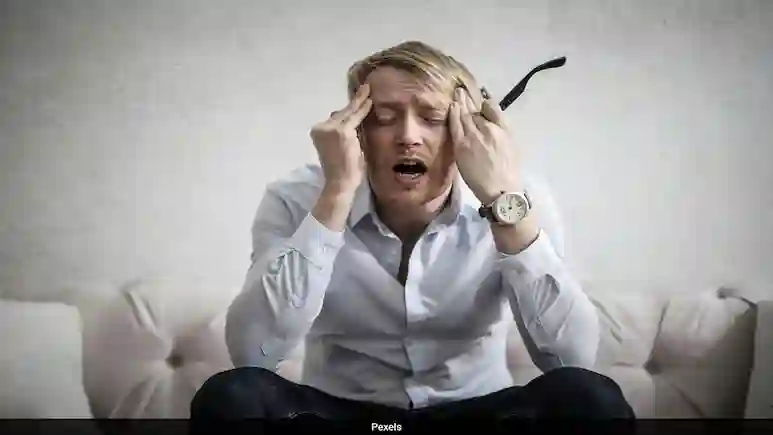
Beginning in late 2016, American diplomats and intelligence personnel stationed in Havana began reporting sudden and troubling health problems. The symptoms — severe headaches, dizziness, tinnitus, nausea, memory lapses and difficulty concentrating — were later grouped under what became popularly known as “Havana Syndrome.”
Norwegian Scientist Gives Himself Brain Damage, Trying To Disprove ‘Havana Syndrome’
The unexplained medical cases quickly drew international attention and cast a shadow over the fragile diplomatic thaw. Since the first reports in Cuba, similar incidents have surfaced in China, parts of Europe and even Washington. The US government now refers to such cases as “Anomalous Health Incidents.”
Investigations have involved multiple agencies, including the Central Intelligence Agency and the United States Department of State.
Investigations, Theories and Ongoing Debate
Scientific and intelligence reviews have produced mixed findings.
Studies led by the National Institutes of Health concluded that while affected individuals experienced genuine and sometimes debilitating symptoms, brain imaging did not reveal consistent evidence of physical injury. Subsequent intelligence assessments suggested it was unlikely that a foreign adversary was responsible in most cases, though investigators stopped short of ruling out all possibilities.
Several theories have emerged over the years. Some researchers argue the symptoms may be linked to stress-related illnesses or environmental exposure. Others have explored whether pulsed microwave radiation or directed-energy devices could be responsible, but no conclusive proof has been established.
The controversy resurfaced after reports by Reuters and The Washington Post revealed that a Norwegian scientist built a microwave-emitting device to test the directed-energy hypothesis on himself. According to the reports, he later developed neurological symptoms similar to those described in Havana Syndrome cases. US officials, including representatives from the United States Department of Defense, reviewed the findings.
Experts caution that a single self-experiment cannot establish causation. Nearly a decade after the first reports, Havana Syndrome remains one of the most controversial and unresolved medical and intelligence mysteries in recent years.

Latest Posts
- Jammu Kashmir Finance Department Issues Guidelines on Utilization of Constituency Development Fund
March 13, 2026 | Breaking News, Jammu Kashmir - Who Is Mohammad Ali Jafari, Architect of Mosaic Defence doctrine Behind Iran’s War Strategy?
March 13, 2026 | Featured by VoM, Politics, World - Deputy Commissioner Doda Visits GMC Doda to Enquire About Road Accident Victims
March 13, 2026 | Breaking News, Doda, Jammu Kashmir - J&K Govt Orders Inquiry Into Alleged Misrepresentation District Mineral Officer Rajouri
March 13, 2026 | Breaking News, Jammu Kashmir - Jammu Kashmir Govt Constitutes Committee to Implement Whole-of-Government Approach for Ease of Living
March 13, 2026 | Breaking News, Jammu Kashmir - Committee Formed to Review S.O. 133 of 2022 on MTS Recruitment in Jammu Kashmir
March 13, 2026 | Jammu Kashmir - Tragic Accident in Bhaderwah Doda, 2 Killed | 2 Injured
March 13, 2026 | Breaking News, Doda, Jammu Kashmir - Iran War LIVE Updates March 13 -2026: New Iranian Leader Warns of Continued Attacks as Israel Launches Fresh Strikes on Tehran
March 13, 2026 | Live Updates, Politics, World - Russia Sentences 15 To Life Over Deadly 2024 Concert Hall Attack
March 12, 2026 | Breaking News, Politics, World - Horton International Expands its Global Footprint with Renewed India Presence
March 12, 2026 | Breaking News, Business, World