 Follow on Google News
Community-Led Conservation in Laos Is Bringing One of the World’s Rarest Crocodiles Back from the Brink
New research led by WCS documents recovery of Critically Endangered Siamese crocodiles through local stewardship and long-term protection
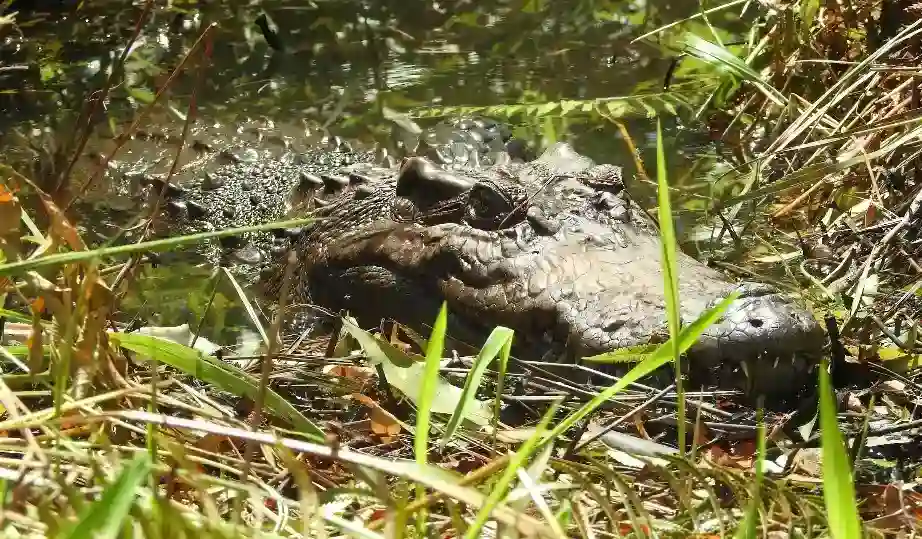
VIENTIANE, LAOS, January 22, 2026— New findings detailed in a recent report led by the Wildlife Conservation Society show how long-term, community-based conservation efforts in central Laos are helping restore one of the world’s most endangered crocodilians—the Siamese crocodile (Crocodylus siamensis)—to wetlands where it had nearly vanished.
The research was published in the Newsletter of the Crocodile Specialist Group, part of the IUCN Species Survival Commission. Read the report here.
“Recovery is possible—even for species on the edge of extinction—when conservation is built around local knowledge, cultural values, and sustained scientific monitoring,” said Steven Platt, a WCS conservation scientist who has helped lead Siamese crocodile research and recovery efforts in Laos for more than a decade.
Once widespread across Southeast Asia, Siamese crocodiles have suffered catastrophic declines over the past half-century due to habitat loss, hunting, and egg collection. Fewer than 1,000 adults are believed to survive in the wild today. In Laos, WCS and government partners have worked closely with local communities since 2011 to reverse that trend in the Xe Champhone wetland ecosystem, now recognized as a stronghold for the species.
The report documents steady reproductive success in the Xe Champhone wetlands, including consistent nest production, high egg viability, and the successful breeding of crocodiles that were themselves head-started and released years earlier. Annual nest surveys indicate the wetland complex supports one of the largest remaining wild populations of Siamese crocodiles in mainland Southeast Asia.
A cornerstone of the program is collaboration with Village Conservation Teams. “These locally recruited groups are trained and supported by WCS to monitor crocodile nests, protect eggs from flooding or poaching, and assist with incubation and release efforts,” said Santi Saypanya, country director for the WCS Laos Program. “The teams build on long-held cultural beliefs that crocodiles are spiritual guardians, creating powerful incentives for protection.”
Each year during the nesting season, teams locate nests constructed on floating mats of peat and vegetation—critical breeding habitat for the species. Eggs are carefully collected from many nests and incubated in village facilities, where hatchlings are reared until they reach a size less vulnerable to predators. The young crocodiles are then released back into the wetlands using “soft-release” techniques designed to increase survival and site fidelity.
“The recovery we’re seeing with Siamese crocodiles reflects years of trust, collaboration, and shared commitment between local leaders, government partners, and WCS” said Colin Poole, WCS Greater Mekong Regional Director.
Since 2019, WCS and its partners have released hundreds of head-started Siamese crocodiles into the Xe Champhone wetlands, with hundreds more currently being reared for future release.
Beyond protecting a single species, the work has broader significance for wetland conservation in the Mekong region. Siamese crocodiles are considered a keystone species, and their recovery reflects improvements in wetland health that benefit fish, birds, and local livelihoods.
“At a time when biodiversity loss can feel overwhelming, this work offers a positive example of what sustained, locally based conservation activities can achieve,” Poole said.
WCS (Wildlife Conservation Society)
WCS combines the power of its zoos and an aquarium in New York City and a Global Conservation Program in more than 50 countries to achieve its mission to save wildlife and wild places. WCS runs the world’s largest conservation field program, protecting more than 50 percent of Earth’s known biodiversity; in partnership with governments, Indigenous People, Local Communities, and the private sector. Its four zoos and aquarium (the Bronx Zoo, Central Park Zoo, Queens Zoo, Prospect Park Zoo, and the New York Aquarium) welcome more than 3.5 million visitors each year, inspiring generations to care for nature.

Latest Posts
- Jammu Kashmir Finance Department Issues Guidelines on Utilization of Constituency Development Fund
March 13, 2026 | Breaking News, Jammu Kashmir - Who Is Mohammad Ali Jafari, Architect of Mosaic Defence doctrine Behind Iran’s War Strategy?
March 13, 2026 | Featured by VoM, Politics, World - Deputy Commissioner Doda Visits GMC Doda to Enquire About Road Accident Victims
March 13, 2026 | Breaking News, Doda, Jammu Kashmir - J&K Govt Orders Inquiry Into Alleged Misrepresentation District Mineral Officer Rajouri
March 13, 2026 | Breaking News, Jammu Kashmir - Jammu Kashmir Govt Constitutes Committee to Implement Whole-of-Government Approach for Ease of Living
March 13, 2026 | Breaking News, Jammu Kashmir - Committee Formed to Review S.O. 133 of 2022 on MTS Recruitment in Jammu Kashmir
March 13, 2026 | Jammu Kashmir - Tragic Accident in Bhaderwah Doda, 2 Killed | 2 Injured
March 13, 2026 | Breaking News, Doda, Jammu Kashmir - Iran War LIVE Updates March 13 -2026: New Iranian Leader Warns of Continued Attacks as Israel Launches Fresh Strikes on Tehran
March 13, 2026 | Live Updates, Politics, World - Russia Sentences 15 To Life Over Deadly 2024 Concert Hall Attack
March 12, 2026 | Breaking News, Politics, World - Horton International Expands its Global Footprint with Renewed India Presence
March 12, 2026 | Breaking News, Business, World