 Follow on Google News
Pakistan Astronauts To Train For China’s Tiangong Space Station In Historic First
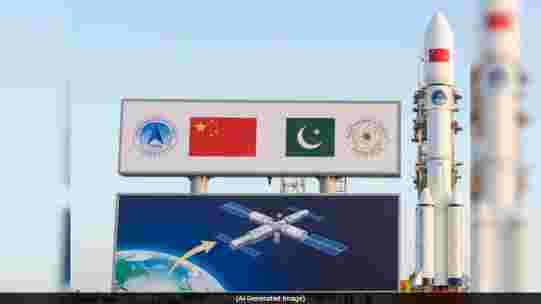
China has selected two Pakistani nationals for astronaut training aboard its Tiangong space station, marking the first time a foreign astronaut will fly on a Chinese space mission, according to the Chinese News Agency Xinhua.
The China Manned Space Agency confirmed on Wednesday that Muhammad Zeeshan Ali and Khurram Daud have been chosen as reserve astronauts and will shortly travel to China to begin their training. Once both candidates complete all required training and evaluations, one of them will travel to the Tiangong station as a payload specialist.
The selection comes after China and Pakistan signed a formal cooperation agreement in February 2025 in Islamabad. Three rounds of rigorous screening followed before the two candidates were shortlisted, Xinhua reported.
Beijing described the development as a milestone in its space programme and pointed to it as a demonstration of the China-Pakistan “all-weather strategic cooperative partnership” extending now into outer space.
China’s space agency further stated that Tiangong remains open to international participation, including in areas such as scientific experiments, technological testing and astronaut training.
A Different Orbit: How India Stands Apart In The Region
As China and Pakistan expand their cooperation in space, India’s has captured the imagination of the world for a different reason, scale, self-reliance and global impact.
Through the work of Indian Space Research Organisation (ISRO), India has delivered milestones that have resonated far beyond the region. The Chandrayaan-3 mission made it the first country to land near the Moon’s south pole, while the Mars Orbiter Mission earned worldwide attention for achieving interplanetary success at a fraction of typical costs.
Looking ahead, the Gaganyaan programme is set to place India among a select group of nations with independent human spaceflight capability, alongside long-term plans for establishing its own space station by 2035.
What sets India apart is not just its achievements, but the model behind them, which is largely driven by indigenous innovation, cost efficiency and scientific capability.

Latest Posts
- France Drops US Spy Software Palantir; To Reply on Homegrown AI For Its Spy Agency
June 17, 2026 | Breaking News, Technology, World - Analyst & International Mediator Faisal Muhammad Claims Trump Expressed Support for India During Meeting With PM Modi
June 17, 2026 | Breaking News, India, Politics, World - Starbucks South Korea Shuts 2,000 Stores After Marketing Campaign Sparks Outrage
June 17, 2026 | Breaking News, World - Amarnath Yatra; High Level Delegation From MHA to Visit Jammu Kashmir
June 17, 2026 | Breaking News, India - Cyviation, Cargo Facts, and Royal Media Present Cyber Aviation Global Forum: Building Cyber Resilience Across the Aviation Ecosystem
June 16, 2026 | Press Release, World - Richmond Flying Squirrels Raise the Bar for Live Baseball Production with Grass Valley
June 16, 2026 | Press Release, World - Swedfund invests USD 15 million to expand access to capital for MSMEs in Sri Lanka
June 16, 2026 | Press Release, World - Bangladesh Summons Indian Envoy Following Screening of PM Adviser Zahed ur Rahman; India Yet to Respond
June 16, 2026 | Breaking News, India, Politics, World - India–Mongolia Friendship Tree Planted at Lok Niwas in Ladakh, LG Vinai Kumar Saxena Calls it a “Symbol of Friendship”
June 16, 2026 | Breaking News, India - After Australia, Now UK PM Keir Starmer Likely To Announce Social Media Ban for Under-16s
June 16, 2026 | Breaking News, Social Media, World