
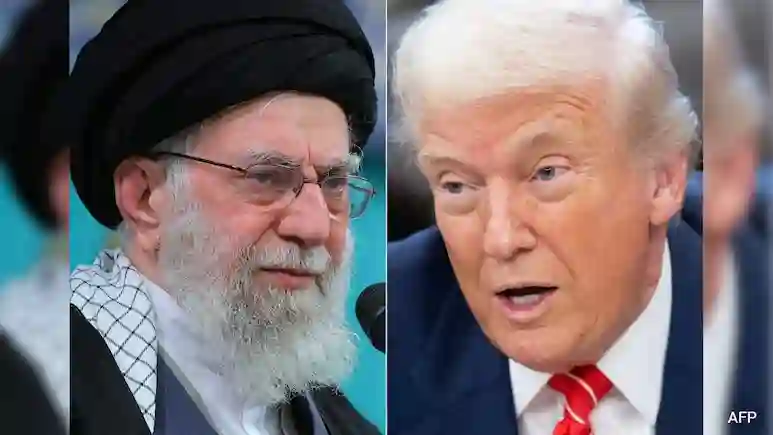
Iran Says Sanctions Relief Must Be Part of Any Nuclear Deal
Iran has signalled it is ready to discuss concerns surrounding its nuclear programme — but only if sanctions relief is placed firmly on the negotiating table.
Speaking to the BBC, Deputy Foreign Minister Majid Takht-Ravanchi said Tehran would not accept a one-sided arrangement. “We are ready to discuss issues related to our programme provided that they are also ready to talk about sanctions,” he said, adding that “the ball is in America’s court.”
The remarks come after indirect talks held on February 6 in Oman between Iranian Foreign Minister Abbas Araghchi and US envoy Steve Witkoff, alongside Jared Kushner, son-in-law of US President Donald Trump. Omani officials acted as intermediaries. A second round of discussions is expected next week in Geneva, with Switzerland continuing its longstanding role as a diplomatic bridge between Tehran and Washington.
Switzerland has represented US interests in Iran since diplomatic ties were severed following the 1980 hostage crisis, maintaining limited consular and diplomatic channels between the two countries.
Trust Deficit Shadows Fragile Negotiations
Takht-Ravanchi cautioned that it was too early to predict whether the renewed diplomatic push would produce results. He pointed to last year’s failed negotiations, which collapsed in June when Israel launched a 12-day war on Iran that included US strikes on Iranian nuclear sites.
The breakdown deepened mistrust in Tehran. Iranian officials were reportedly frustrated by the lack of technical engagement in earlier talks, particularly on complex nuclear issues. The minister warned that a growing American military presence in the region would be “traumatic” and could escalate tensions further.
“If we feel that this is an existential threat, we will respond accordingly,” he said, stressing that any conflict would have consequences beyond Iran.
President Trump has repeatedly warned Tehran that failure to reach a deal would carry severe consequences, even suggesting that regime change would be the “best thing” for Iran. He recently ordered a second aircraft carrier to the Middle East, intensifying military pressure.
The Trump administration maintains that Iran must halt uranium enrichment entirely under any agreement. Tehran has rejected that demand, insisting its nuclear programme is peaceful and non-negotiable in terms of enrichment rights.
Before last year’s conflict, Iran had enriched uranium to 60% purity — a short technical step from weapons-grade levels. While Iranian President Masoud Pezeshkian has said the country is open to verification, inspectors from the International Atomic Energy Agency have been unable for months to fully monitor Iran’s stockpile.
Gulf Arab states have warned that military escalation could ignite a broader regional conflict. For now, both Washington and Tehran appear to be testing whether diplomacy can succeed where past efforts have faltered.
About the Author

VoM News Desk -is an online web portal in jammu Kashmir offers regional, National & global news.
Latest Posts
- Sri Lanka Beat England in Historic ODI Chase23 Oct 2026
- 7.0 Magnitude Earthquake Strikes Tibet Weeks After Deadly Flash Floods22 Oct 2026
- Harry Brook Creates ODI History With Fastest Double Century Off 114 Balls; Sri lanka Smudges England22 Oct 2026
- Jammu Kashmir High Court Allows Regular Engagement of Casual Workers Who Donated Land for Tube Wells22 Oct 2026
- Adani Total Gas Q2 Profit Rises 3% To Rs 167 Crore, Revenue Up 34%22 Oct 2026
- 6 Killed, 40 Injured As Bus Crashes Into Tree In Chhattisgarh22 Oct 2026
- Indian Among 2 Killed In Attack On Saudi Airport, 2 Others Injured22 Oct 2026
- Swedfund invests USD 35 million to accelerate climate action and resilience in India21 Oct 2026
- JKBOSE Sub-Office Doda Bars Supervisory Staff From Carrying Mobile Phones During Class 10, 11 and 12 Exams, issues Circular21 Oct 2026
- Kishtwar ACD Rejects Ex-DDC Member’s Allegations of Delay in Complaint Inquiry, Cites Non-Cooperation21 Oct 2026