 Follow on Google News
First Solar Eclipse of 2026 on February 17: All You Need to Know About the ‘Ring of Fire’
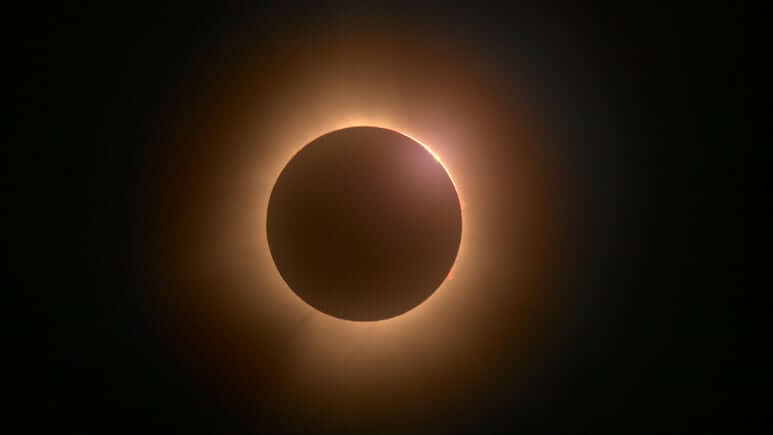
Skywatchers across the globe are gearing up for the first solar eclipse of 2026, set to occur on Tuesday, February 17. The much-anticipated celestial event is an annular solar eclipse, popularly known as the “Ring of Fire.”
During this phenomenon, the Sun, Moon and Earth align in a straight line. The Moon passes between the Earth and the Sun, casting a shadow on the planet. However, unlike a total solar eclipse, the Moon doesn’t completely cover the Sun.
According to NASA, an annular solar eclipse occurs when the Moon is at or near its farthest point from Earth in its orbit. At that distance, it appears slightly smaller in the sky and cannot fully obscure the Sun. What remains visible is a bright, fiery ring encircling the dark silhouette of the Moon — the striking “Ring of Fire” effect.
Solar Eclipse 2026: Date, Time and Duration
The February 17 solar eclipse will begin at 07:01 UTC, as reported by Forbes. The annular phase — when the ring is clearly visible — will last for up to 2 minutes and 20 seconds at its maximum point.
As noted by Space.com, the Moon is expected to cover about 96% of the Sun’s centre at peak alignment. That narrow margin is precisely what creates the luminous ring effect instead of plunging the region into complete darkness.
Will the Solar Eclipse 2026 Be Visible From India?
No, the February 17 solar eclipse will not be visible from India. The alignment will take place primarily in the Southern Hemisphere at a time when the Sun remains below the horizon for much of the Indian subcontinent.
The maximum annular eclipse will be visible over Antarctica, including research stations such as Concordia and Mirny. Parts of Southern Africa — including South Africa, Tanzania, Zambia and Zimbabwe — are expected to witness partial phases of the eclipse.
In South America, sections of Argentina and Chile will also experience partial visibility.
Eclipse meteorologist Jay Anderson, writing on Eclipsophile.com, observed that very few people are likely to see the full annular phase in person due to its remote path. The annular zone passes through sparsely populated regions, making it one of the more challenging eclipses to observe directly.
As always, experts advise using certified solar viewing glasses or indirect viewing methods to safely observe any solar eclipse. Looking at the Sun without proper protection can cause serious eye damage — even during an annular eclipse.

Latest Posts
- Fuel Demand in India Surges as Petrol and Diesel Sales Rise in July
August 3, 2026 | Breaking News, India - Willie Walsh Appointed as New CEO of IndiGo
August 3, 2026 | Breaking News, Business, World - Parliament Monsoon Session Enters Third Week; The Bankers’ Books Evidence Bill 2026, and The Indian Statistical Institute Bill 2026 Likely To Be Introduced
August 3, 2026 | Breaking News, India, Politics - 72 Dead in Ceuta as Record Number of Migrants Reach Spanish Enclave
August 3, 2026 | Breaking News, World - Suicide Bombing at Peace Rally in Khyber Pakhtunkhwa Leaves 13 Dead
August 3, 2026 | Breaking News, Pakistan News, World - Bomb Blast Hits Moscow Restaurant; Three Killed
August 2, 2026 | Breaking News, World - 13 Dead in Peru Plane Crash Near Nazca Lines
August 2, 2026 | Breaking News, World - Cops Are Busy Doing Business Rather Than Maintaining Law And Order: Allahabad High Court
August 2, 2026 | Breaking News, Courts & Law, India - OPEC+ set for September quota increase followed by pause, sources say
August 2, 2026 | Breaking News, Business, Stock Market - Huaxin Expands Global Presence With $807 Million Acquisition of Holcim Philippines
August 2, 2026 | Breaking News, Business, Stock Market