 Follow on Google News
Supreme Court Slams Meta on WhatsApp Privacy Policy, Says ‘Follow Constitution or Leave India’
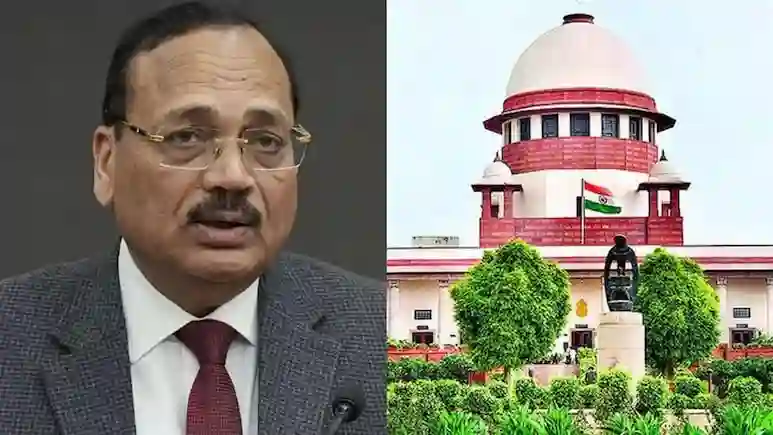
The Supreme Court came down sharply on Meta on Tuesday while hearing challenges to WhatsApp’s controversial 2021 “take it or leave it” privacy policy, with Chief Justice Surya Kant questioning how forced consent could ever be considered lawful under the Constitution.
To underline the court’s concern, the Chief Justice shared a personal anecdote. He said that if a user messages a doctor on WhatsApp about feeling unwell and receives a prescription, targeted advertisements related to medicines often begin appearing soon after.
“That itself shows what is happening with data,” the Chief Justice observed, suggesting that private user information is being quietly shared between Meta, WhatsApp and third parties for commercial gain.
In a pointed warning, he added, “We will not allow you to share a single digit of our data. If you can’t follow our Constitution, leave India.” He described the policy as “exploitative” and said such practices amounted to a “mockery of the Constitution.”
The bench was hearing petitions related to WhatsApp’s privacy policy, including a challenge to an order of the company law tribunal that upheld a ₹213 crore penalty imposed by the Competition Commission of India (CCI). The fine was linked to WhatsApp’s data-sharing practices and their impact on competition.
Are American businesses on life support? New debt data reveals troubling trend
There was also a cross-appeal by the CCI concerning the sharing of user data for advertising purposes. While the tribunal had earlier ruled that there was no abuse of dominance by Meta, it still allowed the regulator’s appeal on data sharing.
During the hearing, the court questioned how user consent could be treated as genuine when accepting the updated policy was mandatory to continue using the app. The judges also expressed scepticism about Meta’s claim that users had meaningful “opt-out” options.
Noting that many users may not fully grasp the “crafty language” used in such policies, the court said consent obtained in this manner appeared to be “manufactured consent.” It described ordinary users as “silent consumers” who were being commercially exploited without a real choice.
The bench indicated that it was prima facie of the view that the system leaves users with no effective voice or control over their personal data.
The matter has now been listed for further hearing on February 9. The Supreme Court also directed that the Union government be added as a respondent, allowing it to file its counter affidavit in the case.

Latest Posts
- Powerful Collision of Car With Truck on Jammu-Srinagar NH, 3 Died, Two Injured
June 14, 2026 | Breaking News, Jammu Kashmir - North Korea Says Nuclear Status Is Irreversible, Kim Yo Jong Calls It A “Line of No Retreat”
June 14, 2026 | Breaking News, Politics, World - Violence in Northwestern Nigeria: 17 Farmers Killed, 13 Injured as Insecurity Persists
June 14, 2026 | Breaking News, Crime, World - Japan Delegation Heading To Greenland For Accessing/Evaluating Rare Earth Minerals Extraction
June 14, 2026 | Breaking News, World - Iran-US Deal in Final Stage; Next 24 Hours Crucial, Says Pakistan PM Shehbaz Sharif
June 14, 2026 | Breaking News, Politics, World - Violations of Hormuz Blockade Won’t Be Tolerated: Marco Rubio Tells S. Jaishankar
June 14, 2026 | Breaking News, Politics, World - Donald Trump Vows to Sign Deal with Iran Tomorrow, Tehran Downplays Announcement
June 14, 2026 | Breaking News, Politics, World - Starlink Constellation Crosses 10,600 Satellites After Latest SpaceX Launch
June 13, 2026 | Breaking News, Entertainment - The East Palace OTT Release Date: Know When and Where to Watch it Online
June 13, 2026 | Breaking News, Entertainment - Raakh Now Streaming Online: Where to Watch This Ali Fazal’s Investigative Thriller Series
June 13, 2026 | Breaking News, Entertainment