
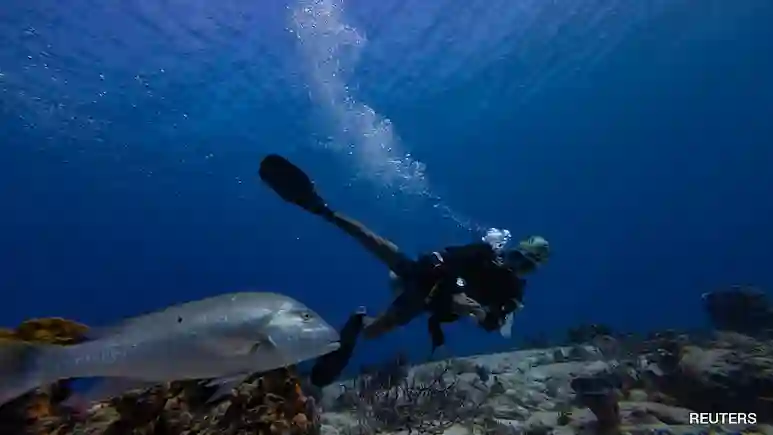
Global High Seas Biodiversity Treaty Enters into Force, Marking Major Step Toward Ocean Protection
A landmark United Nations treaty aimed at protecting biodiversity in international waters officially came into force on Saturday, creating the first legally binding global framework to safeguard the high seas from mounting threats such as overfishing and environmental degradation.
Known formally as the Biodiversity Beyond National Jurisdiction (BBNJ) agreement, the treaty is designed to help countries meet the global goal of protecting 30 per cent of the world’s oceans by 2030. The high seas—areas beyond national jurisdiction—cover nearly two-thirds of the ocean and about half of the Earth’s surface, long remaining largely unregulated.
Finalised in March 2023 after more than 15 years of negotiations, the treaty allows for the establishment of a worldwide network of marine protected areas in international waters. These zones are expected to play a critical role in conserving fragile and previously unmanaged ocean ecosystems.
“It’s two-thirds of the ocean and half the surface of the planet that, for the first time, will have a comprehensive legal regime,” said Adam McCarthy, first assistant secretary at Australia’s foreign ministry and a co-chair of the treaty’s preparatory committee, while briefing the media.
The agreement crossed the required threshold of 60 ratifications on September 19 last year, triggering its entry into force 120 days later. Since then, support has continued to grow, with the number of ratifying countries exceeding 80. China, Brazil, and Japan are among those that have recently joined, while Britain and Australia are expected to follow.
Imperial Hotel Kyoto to Open on March 5, 2026, Featuring Four Signature Dining Experiences
The United States signed the treaty under the previous administration but has yet to ratify it.
“While 60 ratifications were enough to bring the treaty into force, its real effectiveness depends on broad, ideally universal, participation,” said Rebecca Hubbard, director of the High Seas Alliance, a coalition of environmental organisations. “We’re aiming for all UN member states to ratify the treaty.”
Under the new framework, countries will be required to conduct environmental impact assessments for activities that could harm ocean ecosystems. The treaty also introduces mechanisms for sharing the benefits of the so-called blue economy, including marine genetic resources used in sectors such as biotechnology and pharmaceuticals.
Despite its significance, environmental groups caution that the scale of the challenge remains immense. Experts estimate that more than 190,000 protected areas would need to be created worldwide to achieve the “30 by 30” target. At present, only around 8 per cent of the ocean—roughly 29 million square kilometres—is under some form of protection.
The treaty also stops short of addressing one of the most contentious issues in ocean conservation: deep-sea mining. Authority over seabed mineral extraction remains with the International Seabed Authority (ISA), limiting the treaty’s reach in this area.
“BBNJ is very ambitious, but it has defined limits,” McCarthy acknowledged. “Mining in the seabed falls under the ISA. It’s not an area where the BBNJ has a role.”
Even so, conservationists view the treaty’s entry into force as a historic milestone, offering a long-awaited legal foundation to protect the vast and vulnerable ecosystems of the high seas.
About the Author

I am a journalist
Latest Posts
- Around 2.7 Lakh Students to Appear in JKBOSE Class 10, 11 and 12 Exams19 Oct 2026
- Trump Accuses Volodymyr Zelensky of Blocking Russia-Ukraine Peace19 Oct 2026
- Father-Son Duo Arrested for Alleged Murder of SPO in Kishtwar, Land Dispute Suspected19 Oct 2026
- Microsoft Announces $50 Xbox Nano Controller, Launch Set for Next Month19 Oct 2026
- OnePlus 16 Global and Indian Variants Reportedly Under Testing With Three Model Numbers19 Oct 2026
- US-Designated Global Terrorist Muhammad Sarwar Dies in Lahore19 Oct 2026
- Three Suspects in Tiger Shroff Firing Case Caught at Kota Railway Station19 Oct 2026
- Srinagar-Bound Bus Attacked in Haryana, Two Held; Omar Abdullah Seeks Strict Action19 Oct 2026
- Trump Endorses Netanyahu Ahead of Israel’s October 27 Election19 Oct 2026
- Venezuela Opposition Parties Choose Nobel Laureate Maria Machado As Leader19 Oct 2026